PT 5 - Nepal 2016 - Final thoughts
Normally I like to spend a few days...
Packing up and heading home
Normally I like to spend a few days after a long cycle trying to absorb the experience and generally ease out of the touring mindset. On this occasion, almost immediately after unpacking my things and settling back into my hotel room, I start to feel restless. I take a long walk through town but it’s just not the same, the hooting, the incessant sales pitches, constant jostling of the crowds and threat of been knocked down in the traffic.

The façade of this trekking tourism area crumbles down around me and for the first time I see that its all an illusion, the traditional buildings, local dress, friendly conversations, colorful merchandise, fake, fake, fake. I know its an overreaction, a symptom of been exposed to the real Nepal for too long, but I can’t stay.

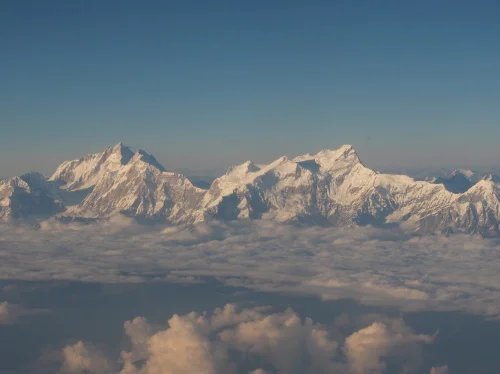
I go online and change all my flight bookings so that I can leave the following day. Later that evening I dismantle my bike but can’t remove one of the pedals, so it’s a really tight fit in the already slightly too small bike bag. The next day, we take off in the late afternoon and fly all along the Himalayan mountain range. I am on the wrong side of the plane, craning my neck to get a glimpse of the mountains when a couple on the correct side see me and offer to change seats for a while. I refuse politely for the required period then accept, jamming my camera up against the window.

There before me, rising above the clouds like a giant crocodile’s tail are the Nepalese Himalayan mountain chain, glistening white and spectacular in the diffused light of a late afternoon. After a brief spell, I go back to my seat and promise to send them a set of photos taken from the plane.
The sun sets, and dinner trolleys are rolling down each of the two isle.
In the final analysis
So now, after some time has gone by, I need to find the answer to two very important questions;
Did I chicken out over the pass?
Does it matter?
To take the first question first.
By the time I got up in the morning before the final push towards the pass, my headache had gone, so probably I would have been ok to have carried on. The weather was clear and expected to be good for the next few days, so chances were that although it would still have been extremely cold, it was unlikely to have turned critically bad. There were many groups of trekkers, guides and porters on the trail by this stage, so I wouldn’t have been completely alone over the pass if I did get into difficulty.
The shortness of breath during that night was definitely a problem related to gaining altitude too fast, but I could have gone back down to Manang and spent another day or two acclimatizing. So taking all that into account, I think I probably could have carried on and safely negotiated the pass, it could have been really cool. So, did I chicken out over the pass?
“Hell yes!”

On the second question;
Although I had heard about the pass before, it had never been a goal of mine to try to cross it on this trip. My intention was to get up close to the mountains just to see for myself what they would look like It was only after I spoke to people in Nepal that I considered it as a possibility and even on the trail when people would ask if I was going to do the pass, my answer was always along the lines of, “I’m just going to keep cycling until I stop, and if that’s the other side of the pass then fine, if not, then also fine” While the landscape and scenery on the Annapurna circuit was breathtaking and the riding just amazing, from a cultural aspect it was all but destroyed. Most of the villages have converted over to tourist towns, menus have been standardized at ALL the tea rooms and there is really very little left that could be called authentic. There are tourist check points, medical aid posts, purified water outlets, shops, movie houses and literally 1,000’s of trekkers, guides, porters, pack mules and now Boleros in an endless procession along the trail.
It was only while travelling in the areas outside of the trail, which was the larger part of the trip, that I was able to experience Nepal for what it really is, and appreciate the subtle changes in its culture and people as I moved between the highlands, midlands and low lying regions. There were no tourists on my route, no standardized accommodation or menu’s written in English, no route markers or check points. That’s what I really wanted to experience, that’s what Dylan and I had experienced during our Bhutan to Kathmandu cycle in 2015. So did it really matter that I didn’t go over the pass?
“Hell no!”

Bike, luggage and equipment
Bike.
GIANT XTC 3 SLX 27’5-inch hard tail mountain bike (2015) with MAXXIS CROSSMARK tires.
After a comprehensive service at Himalayan single track in Kathmandu, I suffered no mechanical or any other problems on the ride, only replacing the rear disc pads in Pokhara as a precaution. I had a single puncture, and the tires held air for the entire trip without even the need for topping up, which seemed a little silly really.

Luggage
30lt Deuter Trans alpine 30lt backpack.
Thule pack and pedal rear rack.
10lt dry bag.
As is my custom for this level of bike touring, I stuck with a 30lt backpack, but because the possibility of extreme cold existed, added the rear carrier to accommodate a dry bag full of bulkier clothing.
The quality of the Deuter pack is excellent and it was well balanced and comfortable on my back. There was plenty of versatility in terms of compartments to organize all my kit. I packed everything in separate dry bags or zip lock bags for added protection, but mainly because it makes organizing kit so much easier.
I had heard mixed reports about the Thule rack, mainly that the bolts worked loose and need tightening a few times a day. This was not my experience, although I checked each morning, everything remained secure.
I also had a small bar bag for my cellphone and daily cash, but a tear in the side pouch caused me to loose a camera battery and my lovely penknife given to me by my son Dylan after our Bhutan cycle in 2015. I replaced this in Kathmandu before returning home.

Camera equipment:
Olympus - OM-D M-E1 Micro 4/3 digital camera
GOPRO Session
M-ZUIKO lens - Standard zoom 12-40mm f2.8 (24-80mm f5,6 FF equivalent)
M-ZUIKO lens - 17mm f1.8 (34mm f3.6 FF equivalent)
M-ZUIKO lens - 25 mm f1.8 (50mm f3,6 FF equivalent)
M-ZUIKO lens - 75 mm f1.8 (150mm f3,6 FF equivalent)
SLIK Mini pro - table top tri pod

I struggled terribly with taking a decision as to which camera set up to bring on the trip and on the morning I flew out from Lao, I still had both my Canon 5D and the Olympus micro 4/3 sets lined up next to each other. My final decision to go with the Olympus was based on the rationale that due to weight considerations, I would not be able to take the range of lenses needed to justify taking a full frame camera in the first place. With the Olympus, I was able to take 3 prime lenses and a good quality zoom at half the weight and bulk of the Canon with only one decent prime lens.
In retrospect, I never really missed having a full frame camera with me and I honestly cannot complain about the quality of the images I brought back. It was the right decision.

The other stuff
For me personally, there is something special about travelling on a bike that’s free of luggage. Somehow the set up maintains within my psyche a “Hey, I think I’ll just go for a quick ride on my bike” frame of mind. for me, I have this style of touring down to an art form, with plenty of luxury items included in the mix, loads of camera equipment and separate clothing for the evenings. In fact, looking at the list of items I took with, its difficult to imagine how I fitted it all in, but it was completely manageable, even comfortable. There was nothing I didn’t use, other than the “insurance items” such as spares, first aid and contingency stuff.

In particular, the electronics section appears to be over the top, but every item was used on a daily basis and made it possible for me to keep in contact with my family and friends, check my routes and even enjoy nightly entertainment in the worst of conditions. (Black Adder and Flight of the Conchords)

Overall route statistics

Distance - 1,013 km
Average distance per day - 63 km
Highest milage in one day - 154
Total elevation climbed - 14,420
Ave elevation climbed per day - 901
Most climbing in one day - 1,658
Highest elevation reached - 4,232 MASL
Lowest elevation reached - 103 MASL
Swannie's Little Karoo Cycle - 1949
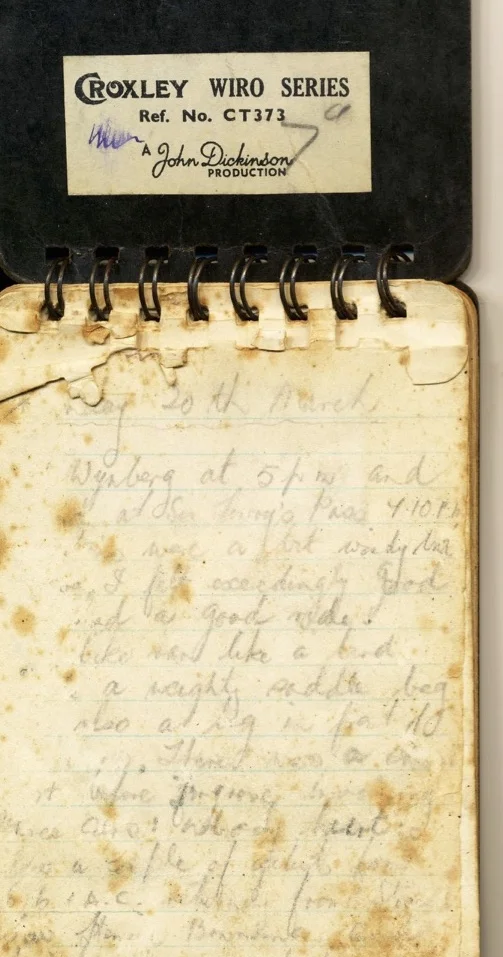
Left Wynberg at 5 pm and arrived at Sir Lowry’s Pass 7.10 Pm. My legs were a bit wobbly but …
Swannie's Little Karoo cycle - 1949

Last month while rummaging through a box of my dad’s belongings during my home visit, I came across an old diary of a cycle trip he had done through the little Karroo as a young man. The pages were stained and yellowed with age. I remembered him showing it to me a few times when I was younger, but I never showed much interest then. With the help of my mom and sister Ellen, I have managed to decipher most of it and found it to be a lovely story of a young man on an adventure, not a world taming, record breaking feet of glory, but an adventure of the common man, similar in many ways to trips of my own.

The diary entries are from 1949, when he was a young man of 25 years old working his apprenticeship at Norton Motors in Cape Town. He and a fellow cyclist had been dreaming of cycling together through Europe, and this short trip was to be a test to see if they were up to the task. When his friend cancelled, my dad decided to continue with the Karoo trip and see where it would take him.

Route map and location of some of the main areas visited
Sunday 20th March (First page mostly unreadable)
Left Wynberg at 5 pm and arrived at Sir Lowry’s Pass 7.10 Pm. My legs were a bit wobbly but …. I felt exceedingly good …. and had a good ride. The bike went like a bird in spite of a weighty saddle bag and also a bag in front of the bars. There was a van on fire at …. anybody here …. nobody hurt …. Henry Brownings .… family ……..

I retired early and had a good night’s rest. How good and exhilarating it is to wake up in the morning and find yourself among all these beautiful mountains and countryside.
Monday
Left Sir Lowry’s pass at 9 am and travelled via Somerset West, Stellenbosch, over Hells Hoogte, Simondium. and then on to Paarl. By that time, it had already become unbearably hot and I decided to put on my cap! only to find that I had either left it at Sir Lowery Pass or lost it along the way. I thought of the toil up Baines Kloof and the definite need for some headgear and bought a cap at Paarl. I only arrived at “Nonna”, Mr Rabie’s farm at De Wet at 7:45pm after taking the wrong road at Worcester.

Bain's Kloof
Distance travelled approx 90m (144km)
Tuesday
Spent a lovely day at the farm and spent some time at the wine kelders at
De Wet.

Wednesday
Left at 5:30am and got a 25-mile (40km) lift on a lorry owned by a Mr. De Wet. Arrived at Laingsburg 12:45pm after having a bit of trouble with front wheel spokes. Got a room at the Grand Hotel and spent the afternoon messing around with spokes instead of, as I felt inclined for, a good sleep. However, a couple of good meals and a good night’s rest put me on the road the next morning at 6:15 again.
Distance travelled 93 miles (150km)
Thursday
About 18-miles out of Laingsburg felt very tired indeed and thought of getting a train. Just then met a farmer Oom (Uncle) Piet Le Roux who was trekking for better pastures with his flock of sheep. He was very kind indeed and offered great chunks of boere (farm style) raisin bread and coffee which I must say, I greedily devoured. After spending about an hour with this Oom I arrived at Prins Albert St. at 11 o'clock. I hired a room at the Karroo Hotel and after a good meal tried to have a sleep which was almost impossible due to the intense heat.

I left again at 5:30pm and arrived at the dorp at 8pm after a ½ hour of grim time riding, riding in the dark on these badly corrugated roads with very loose sand at the sides and also the possibility of a snake or some other reptile parked in your path makes it quite an experience when visibility is just about nil.

Prins Albert
Distance travelled 81 miles (130km)
Monday 28th March

Left Prins Albert at 7:15am and arrived at the Cango caves at 10:30, just too late for first expedition into caves and so had to wait till 12:30. After a very interesting trip through the Caves (only a personal trip to these caves can describe this wonderful works of nature) I Left again at 3:15 and arrived in Oudtshorn at 4:45. Spent the night at the Central Hotel and saw a bit of the town.
Distance travelled 43 miles (69km), this included Swartberg pass which is definitely breathtaking. Have never experienced a pass so steep and also so high above the surrounding Country. The road is narrow and extremely loose which necessitates for very slow descent, also having to stop at intervals to allow brakes to cool down.

Swartberg Pass
Tuesday
Left Oudtshoorn at 7:15am arrived at De Rust 10am. Proceeded through Meirings poort and when midway, was picked up by lorry driver Mr. De Jager who brought me through to Klaarstroom. After a good meal with the De Jager family left on on last leg of the trip. At 12:30 pm and arrived back in Prins Albert about 4:45
Distance travelled 70 miles. (112km)

Back at Prins Albert I spent two lovely quiet weeks simply just eating and sleeping with occasional short cycle trips up the pass and also the near surrounding districts. One of my objectives was also to make a visit to a very queer and out of the way place known as the “Hell”. It is situated about 35 miles (56km) out of Prins Albert in the heart of the Swartberg mountains. It consists only of a small community of people mainly farmers who rely only on their land and stock for their living.
To reach the hell one has to walk along the bed of the Gamka river and pass through a very narrow poort. When the river is in flood or is raining fairly strong, the hell might then completely be cut off from the outside world for days or maybe weeks. Inside the poort the mountains, I believe, are still teaming with leopards and game. From the time one enters the Poort until the first farmhouse is sighted is about 15 miles and due to the inaccessible nature of the place only pack donkey’s or mules are used for transport.

This is what I had to listen to for many a quiet evening in Prins Albert when earnestly enquiring from well known characters how to get to the Hell. I was told that the people there were of a very wild, almost ape-like nature and would sort of tear you apart without the slightest fuss. Most people persuaded me not to attempt the venture, at least not unaccompanied. I abandoned the idea then but was quite sure that had my stay been longer, I would surly have gone there some time or other.

Road to "The Hell" only build after Swannie's trip
This is where I semi cursed the wheels of progress for only allowing a man 1/12 of a year holiday annually. Personally I think the world would still carry on if our annual leave were increased to 3 months so that we could fully appreciate this lovely country of ours. To be up before dawn in the unlimited spaciousness of the Karroo and breathing in the crisp fresh air makes one loathe to go back to the stuffy and bustling atmosphere of a city.

Tuesday 8th April
Left Prins Albert at 11:30a.m and set out for the station 28 miles distant. I was in high spirits
and absolutely as fit as a man could be. I must say that this was the way that I felt right through the course of my trials. I can’t at any time remember feeling down and out or depressed when thinking of my fairly big undertaking in hand, or also while experiencing several 5am rises. I thought this was understandable due to the perfect change in the air kind people, in fact everything as far as I was concerned.

The food that I had since leaving Wynberg was different to what I was used to, sort of rough and ready and also in greater quantities. For my part I could never eat enough and when I did happen to satisfy my enormous appetite was scolded upon by my very find hosts who wanted to know how I liked the sample and when I was going to get stuck in. Some of these “barrel” like farmers can really eat, and regard you with an air of amusement when having my comparatively small plate of rys, vleis and artapples (Rice, meat and potatoes) or if I should tell them what some people have for dinner in Cape Town.
After traversing a series of steps in the road I crossed the drift at Gamka River and from there, the road was comparatively flat and uninteresting. I preferred “steps” to long monotonous uphill’s as the speed carries you to the top of a short hill and from there level to be followed again by a short hill. In this way, height could be easily gained without getting overtired. I arrived at the station at 12 noon and I consider It a speedy ride though I did not intend doing any fast strenuous riding.
It’s understood that he loaded his bike onto the train for the trip back to Cape town.
Trans Karoo 2007
For the third time in less than an hour, I lay sprawled alongside my bike,....
Trans Karoo 2007

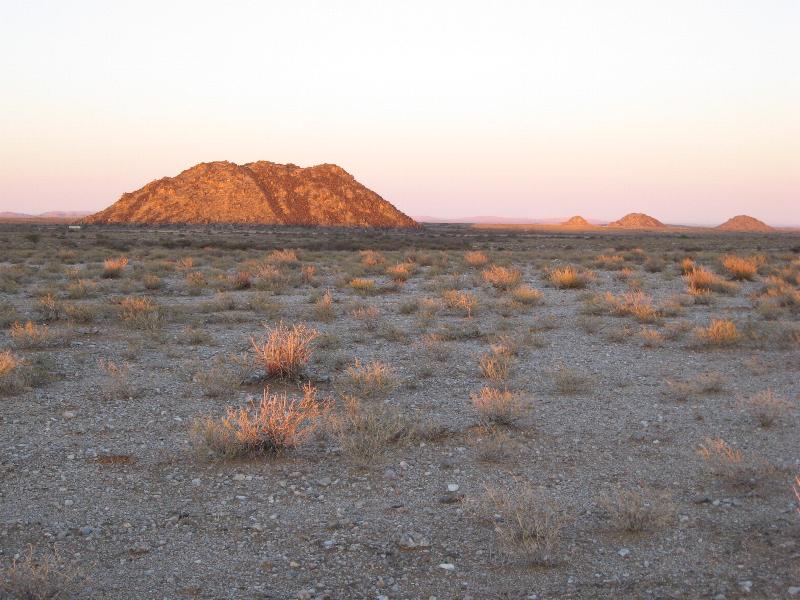
For the third time in less than an hour, I lay sprawled alongside my bike, a victim of the soft curry-powder sands of the Kalahari. Alone and despondent, under a charcoal sky, the fantasies of my adventure became reality.
Distance travelled: 8 km. Distance to go: 1 392 km.
Ever since, as a novice mountain biker, I had won the Freedom Challenge I had begun to suspect that in reality, the opposite of possible is not impossible, but simply “frigging difficult”. That the difference between average and amazing lay not in the chains of a double helix, but in hard work, detailed planning, careful preparation and, more importantly, passion.

And so, after shaking the sand from my ears, refitting the chain and adjusting my rucksack, I skidded, fell, cycled and pushed my way straight into the path of my first Kalahari sunrise.

I had always wondered about the Great Karoo, what I would find in its remoteness, what it would find in me. After many hours bending over piles of maps and squinting at Google Earth, I produced a bright purple line on my map running down the breadth of our country. Following only dirt roads and tracks, my route extended from Askham, on our border with Botswana, through the red sands of Gordonia, the plains and salt pans of Bushmanland, past the koppies of the Great Karoo and over the Swartberg Mountains, to exit the Little Karoo via the Langeberg Mountains, ending at my home in Swellendam.

The Freedom Challenge had taught me many important lessons; like how to travel light and how to keep motivated when covering ridiculous distances for weeks at a time, but it could never have prepared me for the immense mental struggle of riding day after day in country as flat as this. With no hill or valley to break my stride or change my pace, no distant mountains to play with my mind, every km was a mental marathon. I developed strategies to distract myself from any clue of distance and time, but inevitably my mind would continue its relentless countdown: 140 km ... 139 km ... 138 km. To maintain a reasonable forward speed you have to keep pedalling ALL the time.

I must confess that there were times when I gave in to the self-willed child within me, stopped the bike in the middle of the road and pounded the handlebars in utter frustration. Fortunately, the calm, disciplined adult me would gently take back the reins, and together we would set off towards the next km mark on the flat endless ribbon ahead.

So I moved steadily down the line: Askham, Swartstraat, Upington, Kenhardt.
Lying in my hotel bed at Kenhardt, covered with a mountain of down, I watched the weather reporter pointing to the general area of the Great Karoo where little animated rainclouds splashed raindrops onto my route. I drifted into dreamland with these rainclouds turning slow circles through my dreams. Tomorrow, I would be at Verneukpan.

Verneukpan fascinated me – a great saltpan sploshed on the map like a wet bird dropping. Maybe because it was the only real feature that stood out on a map between Askham and Fraserburg, or because it was where Sir Malcolm Campbell broke the land speed record. Either way, I was looking forward to riding over it.

At 5 am I stepped outside into a strong, cold wind, and headed off into the darkness. No friendly sunrise greeted me this morning, and the dawn revealed ominous low, brooding clouds in the direction I was heading. I just managed to gear up for the worst when the first icy drops started falling. By the time I reached the pan, large shallow lakes had formed in every direction. I had expected an easy passage across the vast flat plain, but I was very much mistaken.

The rain had turned the smooth expanse of the pan into a quagmire of thick porridgy clay that built up on my bike (and me) to such an extent that any hope of riding was dissolved. All moving parts jammed solid and the weight added to my bike by the build up of clay made it impossible to carry. Scraping off as much of the sticky porridge as possible, I hauled the bike on my shoulder, staggering a few meters at a time before either succumbing to the weight, or falling heavily onto the squishy surface. All things, even bad things, come to an end, and it was with relief that I finally placed my bike down and found that it was on firm ground. It had taken me four hours to move 2 km!

At the farmhouse on the opposite side of the pan, I listened to stories of speed attempts that had ended in tragedy here, how the vast flat plain can distort one’s perception of distance and size, and how people have got lost – disoriented by its vast expanse. I started to feel somewhat privileged that I too had been verneuked by the pan.

The next few days through Williston and on to Fraserburg were some of the coldest I have ever endured. Carrying the right clothing for the sub-zero temperatures I experienced each morning was a challenge, especially when my entire kit needed to fit into a single 28-litre backpack. Although unbelievably cold, the mornings were the best part of the day, and I revelled in the surge of adventure I felt, setting off alone into the dark unknown. Lost in a cold world, I would become vaguely aware of the pending sunrise, and then an almost unbearable cold snap would occur just before the dawn.

The appearance of the sun above the horizon always caused me to stop and celebrate the new sights and sounds around me. At that moment, everything about my trip would make sense, and I would understand exactly why I was out there.

From Fraserburg, the land underwent a dramatic change, and for the first time since starting the trip six days previously, I rode among mountains. I cannot explain just how wonderful it was to drink in the natural eye candy of the Nuweveld Mountains around me, steep slopes capped with granite, pools of ice along winding roads. Riding silently under a full moon, I soaked in the beauty around me. After hugging the “Steep Descent” signboard at the watershed, I poured water over my gears to melt the ice, and then allowed the large chainring to toss me off the escarpment where the last vast plain of the Great Karoo waited to lead me to Leeu Gamka. Looming cheerfully in the distance lay the Swartberg Mountains.

At Leeu Gamka, I collected my parcel containing maps, spares and other essential supplies which I had sent 'Poste Restante' (they just love it when you talk foreign!) to the local post office. This was one of two such parcels I had forwarded along the route, and the system worked well.

A good night’s sleep in Prince Albert assured me of an early start, and soon I was pedalling under a full moon towards the familiar Swartberg Pass. The scene around me was breathtakingly beautiful. A Land Rover edged past me in the darkness, and it was fascinating (although slightly alarming) to watch the headlights stitching their way through the hairpins higher and higher till they finally disappeared at an impossible angle above me.

I arrived at the top of the pass just after sunrise, and lay on my back with the Karoo and Nuweveld Mountains framed between my shoes. It was beautiful, and a little sad, as if reading the final chapters of an amazing book. With a last glance to the north, I turned my back and headed down towards the Little Karoo, and the Langeberg Mountains in the distance.

My final day from Calitzdorp to Swellendam via the Rooiberg was epic. Over 200 km of undulating dirt road and relentless headwinds awaited me. Leaving the small town of Van Wyksdorp for the final stretch, things began to get a little silly.
I developed a sharp pain in my knee that got worse as the day progressed. In sympathy, my bottom bracket (the one on the bike!) started developing some play, making a 'cluck, donk' noise which is slightly worse than a 'click, click' noise but not nearly as bad as the 'cluck, clang' noise. So if you happened to be lying in the fields on the side of the road as I came past, you would have heard something like:
'Cluck / donk / creak (knee joint) / $!&#*! Cluck / donk / creak / &!#*^!’

Anyway, the result of it all was a rather slow, painful passage along the northern slopes of the Langeberg. I made it through to Barrydale just as the sun set and with 44 km left, it was only the Tradouw Pass and its vagrant leopard that stood between me and my own bed. Both knees were complaining as I rode the last few km along the N2, with trucks, buses and cars whizzing past me. What a contrast from the vast open plains of Bushmanland and the quiet Karoo.

Just past nine, I ground slowly up the last steep section of dirt road that separates my home from the town of Swellendam. I lay on the cold grass outside my house, delaying the end of my adventure a little longer. Looking up at the towering shadow of the Langeberg, my mind drifted back to the moments that would for me always define this trip. The sweet coffee I shared with a farm worker, the generosity of the farming couple at Verneukpan and the sunrise over Bushmanland. In the dark silence, my mind explored the pools and waterfalls I knew were there in the lush ravines above me, and I thought ... 'It's good to be home.'

"A Series of Fortunate Events" (PT3)
Woke up to a crisp clear Karroo morning, and the prospect of an easy days ride ahead of us.......
Day 13 - Willowmore to Prins Albert
160 km
280 m climbing
10 hrs cycling

Freedom race tip # 13 – Saddle sores
Never, and I mean never, examine the part of your body in direct contact with your saddle.
Those strange lumps, bumps and nodules had probably been there your entire life anyway.
Birthday blast
I woke up to a crisp clear Karroo morning, and the prospect of an easy days ride ahead of us. Our minds were now so well tuned to this type of riding that we now considered 160km day “easy” as there were no portages and very little climbing. The entire day only involved something like 300m of climbing. I had to wait for the post office to open as I had sent some “non penalty earning spares” to this town, so Cornell decided to go on ahead and we would meet up in Prince Albert later that evening.

I go a bit of a birthday treat when I opened the parcel and found that Jan (Kings Cycles in Worcester) had thrown in a couple of energy bars for me, no charge! It was a wonderful day's riding, perfectly clear skies, easy navigation, and good dirt roads except for a section of soft sand and corrugations. Running from just outside Willowmore all the way to Prince Albert, the Swartberg mountain range rose increasingly higher above the Karroo plains.

On stopping to open one of the many farm gates along the route, I had to smile, written with a stick in the ground was a message “Happy Birthday Ben”. Bless Cornell! He blasted through like a roadrunner to complete the days run in 8 hours. I took a more leisurely pace arriving just as daylight faded.
We were taken to a restaurant just outside the town by the local guesthouse and had a great dinner. The “easy” day had made us feel a bit wimpish, so we decided to restore balance to our universe with a 3am start the next morning.
Day 14 - Prins Albert to Hartland
110 km
1,920 m climbing
14 hrs cycling


Freedom race tip # 14 – Avoiding punctures in the Karroo.
They lied to us about tyre liners stopping thorns.
Use slime, tyre-liners and when going through the Karoo, beat a strip of sheet metal around the outside of the tyre surface.
To Hell and gone
I say this about almost every day, but THIS was an epic day, 160km, the Swartberg Pass, down into Hell, out the ladder portage” long unrideable sections of track and a final blissful downhill to Hartland farm. The Swartberg Pass is just awesome, 15km of unbelievably steep hairpin bends stitching its way almost vertically to the top of the Swartberg mountain range. First gear, and on some of the hairpin corners it was difficult to keep the front wheel from lifting off the ground. We reached the crest while it was still dark, dawn finally catching us on the long winding road to “The Hell”.

The Hell was a small completely isolated community living deep in the mountains, with the only access being a donkey track clinging to the side of a near vertical cliff at the far end of the valley. Sometime in the early 1900’s some guy tried to bring a car into the valley, to show the people what a car looked like. By dismantling the vehicle and lugged pieces of it up boulder strewn riverbeds with donkeys, ropes and pulley systems for almost a year, the parts all arrived at Die Hell, where they were assembled into a somewhat battered version of its original self. There were however no roads in the Hell, only donkey tracks, so after been admired by the locals with the appropriate ‘oh’s and ah’s”, the car rusted into a pill of junk, sections of which can still be seen today.
Actually the thinking around this entire escapade was not unlike the idea of taking a car to the moon during the Apollo missions! “Hey I know, why don’t we take a car to the moon and cruise around a bit” “The hell” is currently a rustic tourist destination run by CapeNature, the conservation organization I was working for at the time. It’s still very isolated , as the only way in or out is via a bad 4X4 track leading into the village, a track that during rains and snowstorms becomes impassable. In this case, the road to “Hell” is not paved with good intentions or anything else for that matter.
A few descendants of the original villagers still reside in the valley operating small shops, restaurants or providing services for the tourism facilities. Many of the original houses are being restored or preserved as cultural museums.
We arrived in Die Hell around lunch time, and stopped at a rustic restaurant appropriately named “Devils Kitchen”. Here we met the owner; an old timer descended from the original families. He builds traditional handmade piano accordions which he exports by considerable demand to customers in Germany. We were treated to a recital accompanied by the mournful howls of his old faithful sheep dog lying under his bamboo chair.

As is probably true in the afterlife, getting into Die Hell, although difficult enough proved to be far easier than getting out. Shouldering our bikes, we tackled the almost vertical old donkey path known as “Die Leer” (The ladder) gaining almost 1 000m of elevation in about 3 km of switchbacks, an interesting experience made easier by daylight and beautiful blue skies. The previous year I had tackled this portage at 2am under a freezing moonless sky.

The remainder of the day involved a long rough jeep track that proved virtually impossible to ride followed by some of the smoothest dirt roads I have ever experiences, and a final sweet unbroken, never have to pedal, 20km descent to a very well equipped support station at the Hartland farm.
Day 15 - Hartland to Montagu
165 km
960 m climbing
11 hrs cycling


Freedom race tip # 15 - Bring along your sense of humour.
Don’t worry too much about bringing it into Stettynskloof, you are welcome to use mine, I left it in a riverbed halfway up the Kloof.
On Home Soil
As a conservation manager employed by CapeNature, the Provincial agency responsible for protected areas and mountain catchment areas in the Western Cape, it was strange to be routed through areas so familiar to me. I can’t say it was particularly delightful as it signified to me the beginning of the end of this amazing adventure, and in the frame of mind I was in, I would rather have turned the bike around 1 meter from the finish and headed back to Pietermaritzburg! It was all very familiar, dirt roads I used regularly to travel between sites, paths from which we had fought wildfires, Nature Reserves managed by friends and colleges, towns and restaurants I frequented.

It was a long slog, but at this stage of the race who’s watching the speedometer. 165 km across the Little Karroo from the Swartberg Mountains in the North, through the Anysberg Nature Reserve, down the long Ouberg Pass and into Montagu, a peacefully village nestled at the foot of the Langeberg Mountains. We were not to be passing through any towns during this day, so a lunch was to be prepared for us at Anysberg Nature Reserve offices. On arrival we couldn’t locate anyone at the office so although we were in serious need of fuel, burned directly through to Montagu, more than 60 km away. I learned later that we had missed an excellent lunch due to some impatience from my part.

It always amazed me how directly and obviously the quality and or quantity of the nutrition taken during the day affected my performance on the bike and more importantly, my mental state. I came to realize that times of feeling mentally low or physically week were more a product of poor nutrition than of physical circumstances, and all it took was some food and a warm drink to be miraculously rejuvenated, physically and mentally.
We arrived in Montagu at dusk, sat on the pavement outside a local mini mart and wolfed down huge oily helpings of deep fried chips, aware of but immune to the frowns of disapproval from locals out to buy their weekly lottery tickets.
Day 16 - Montagu to Trouthaven
150 km
940 m climbing
17 hrs cycling


Freedom race tip # 16 - Surviving Stettynskloof
Do not actually carry out any of the threats you made in the Kloof. Avoid making life-changing decisions while still in the Kloof.
It’s not your bikes fault.
It is the race director’s fault.
Overberg
Sunday morning saw us on the road by 3 am navigating through small alleys and backyards of the many wine farms in the valley. The dawn stained sky illuminated the dirt road as we moved towards McGregor, arriving in the yawning town just in time (we hoped) for breakfast.
It became amusingly obvious that we were nearing the land of plenty when we were unable to get a breakfast or even a cup of coffee merely due the incorrect position of a thin line of tin moving around the face of the clock. The lady managing the coffee shop was very friendly, standing protectively in front of the steaming coffee machine explaining how sorry she was that it was only 7:30, and she was unable to serve us before the long hand of the clock moved around to the magical number of “8”. We both chuckled as our thoughts drifted to the shepherd high in the mountains who gave us his bed at midnight and his neibour who thought nothing of opened his small shop at that hour so that we could buy a few tins of food.

We didn’t really have the time to watch the long hand do its thing, so we headed off to the first portage of the day, stomachs growling in protest.
Arriving in Casra, we were treated to a huge brunch by the owners of the guesthouse whose culinary skills are legionary in the small community. The mountain of food placed in front of Cornell had him in a cold sweat within the first fork fills and he picked at the pile with long teeth. The lady was actually quite pissed off, standing with hands on hips as she glared at Cornell “How do think I must feel, I have feelings you know”! I had no problems and happily wolfed down a few extra helpings to restore good relations.

The crack on Cornels frame had been getting slightly worse as the kilometers had passed and had now progressed almost entirely around the frame. Using a rusty reinforcing bar, some cable ties and a lot of ingenuity we created a brace for the frame, as an emergency measure should the frame fail. At best, it would give him a few seconds to slow down if the worst should happen. The next portage went well and it was great to see a small herd of Gemsbok roaming free on the plateau at the top of the climb. A long downhill saw us well into the Overberg and soon we were riding along the base of the Hottentots Holland range of mountains, the last massive barrier separating us from the bustle of the city, manager's, telephones, targets, and budgets.
The track eventually brought us into the grounds of the Brandvlei Prison, and it was a bit strange to break into prison, and leave through the main security gate complex unchallenged. I really struggled during the last 20km as we plowed into a strong headwind. Thanks to Cornell's encouragement, we reached the start to the Dwarsberg kloof and rode the final winding road to the Trouthaven lodge.

It was our last night of the race, and having done the race before, I fell into a nervous fitful sleep mindful of the nightmare that waited for us the following day.
Day 17 - Trouthaven to Finish
50 km
800 m climbing
15 hrs cycling

Freedom race tip # 17 - Winning
It isn’t there; it’s all in the journey.
Enjoy and live within every km you cover, you will be day dreaming about the next one from the morning you wake up after the finish.
Stettynskloof
The final day of the Freedom race can be summed up by a single word “Stettynskloof” To the uninitiated it is merely a word printed on a map, to the Freedom Challenge racer “Stettynskloof” represents an altered state of being. Reading back over my notes immediately after race it is interesting to see just how much my state of being was altered at the time and how this is reflected in what I wrote down at the time. In other words, “forgive the psycho mumbo jumbo”
The gravel road from the Trouthaven guest house winds steeply along the mountain side. In the dark of the early morning the steep unguarded drops to the river below keep you tight up against the mountain side of the road as you wind your way up to the dam. This day, due to regulations by officials, is the second of only two days on the route you are not permitted to travel at night.

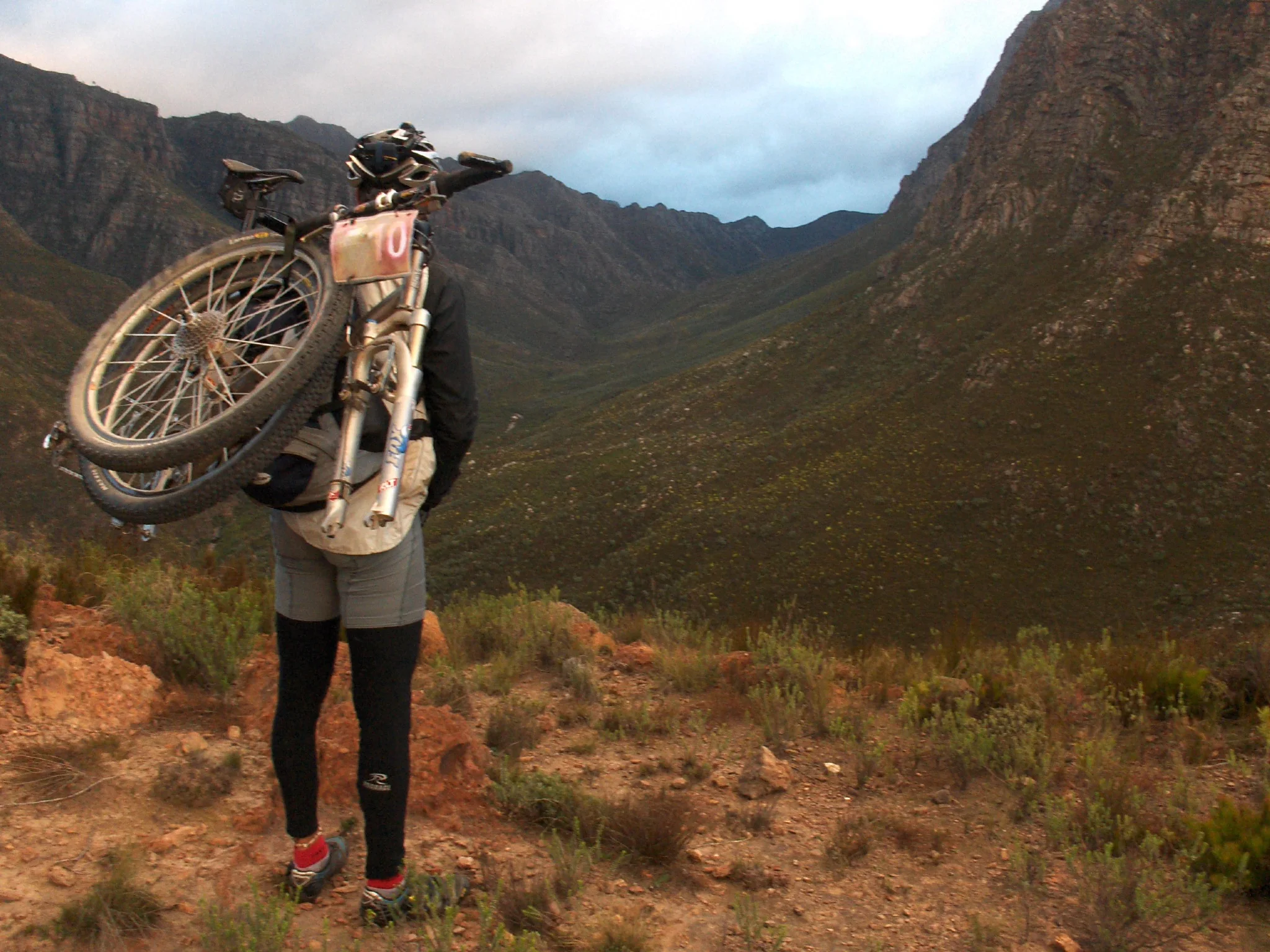
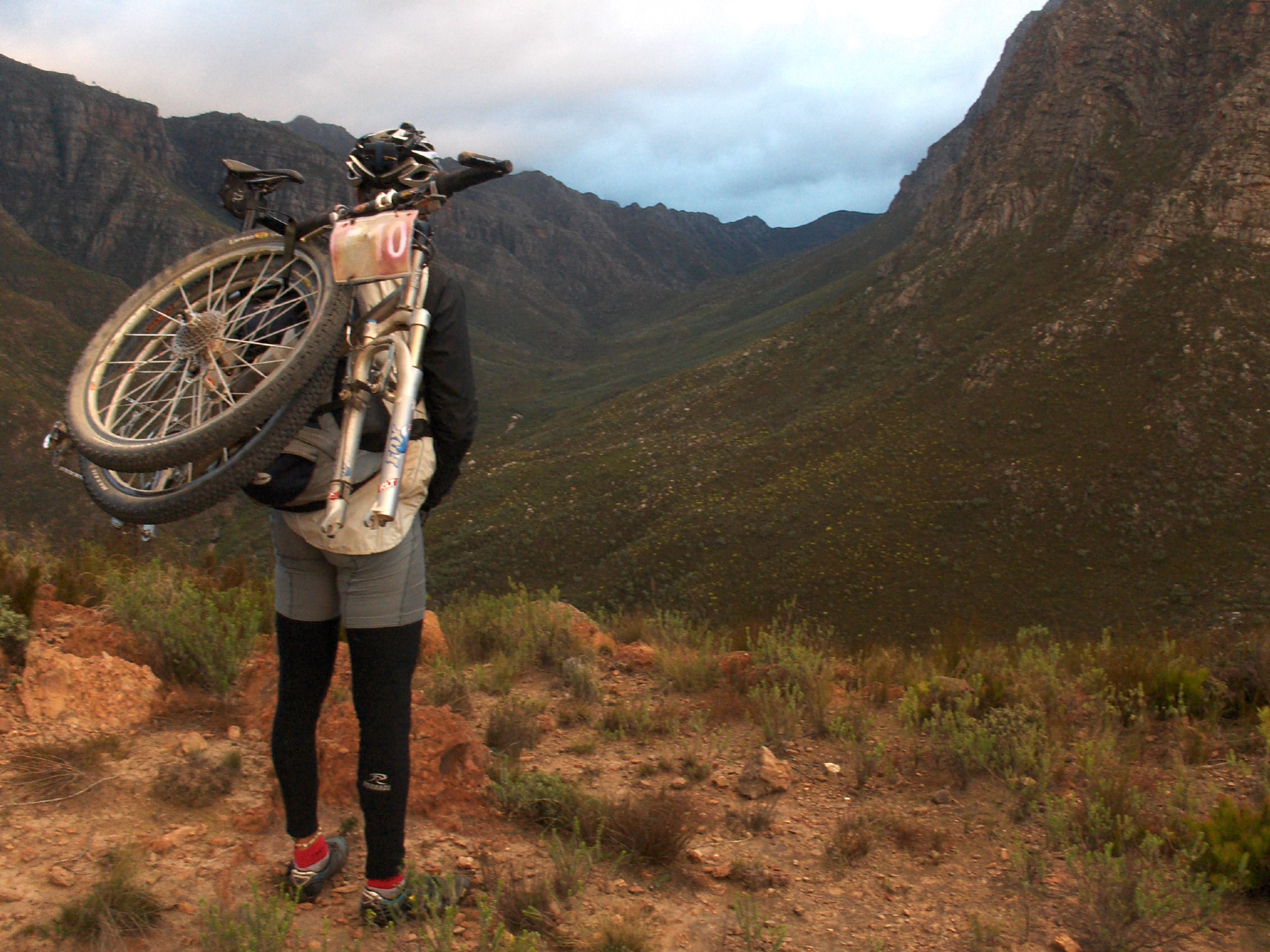
Arriving at the dam wall in darkness, we started preparations, removing all unnecessary equipment from the bike and dismantling it into three pieces, frame, front and rear wheels. The trick was tying it all together and somehow fitting it onto the back of a 30lt rucksack. I struggled with my configuration as it consistently tumbled over my head causing me to crash headlong into the bush and boulders. After a short while, I gave it up as a bad job, reassembled my bike and pushed pulled and later threw it up the kloof as I had done during the previous year’s race.

During the 2005 Freedom Challenge, looking up the valley. The exit point is the small saddle far in the distance.
Stettynskloof is a deep ravine running from the dam wall to the top of the watershed over 9km away. There is no path, no trail to guide your way, only the silhouette of the saddle on the horizon in the distance. Between you and the saddle are 9 000 meters of dense bush, deep rivers clogged with impenetrable vegetation, boulders and gullies. It will take you the entire day, from before sunrise to beyond sunset to reach that saddle.
Every one of those 9 000 meters are designed to test the very essence of your soul. They will twist your ankles, wrench the bike from your arms, smash your shins against rock, claw at your skin and clothes, imprison you in a vice like grip while you dangle helplessly in vegetation too deep for your feet to reach the ground.
They will trip you up and send you and your bike tumbling, they will sap every ounce of your energy, and then frustrate you to such an extent that you will lose the mental battle and give in to a choking anger so intense that your throat will constrict, making it impossible to breathe without an audible rasp, not from pain but from sheer frustration.
At that point you will lose control, and fight the kloof wildly throwing your body headlong into solid walls of bush, slamming your bike over and over into an impenetrable tangle of thorn brush in sheer frustration, not caring that you are making absolutely no impact. This will drain you of any reserves you had left and leave you trembling and week as you realize in panic that despite your efforts and skills to have got this far in the race, you are not going to made it out of the kloof, not just today, but ever. You have been utterly defeated. t is at this point that you are finally broken, humbled but also humiliated. No matter how good your technical skills, age, physical condition or mental state, you are brought to complete brokenness. What happens beyond this point will be your ultimate test, your rite of passage and all your Gods and mentors, heroes and villains stop, look down on you to watch and see.
Then if you accept the fact that without the help of your fellow man you are weak, without the help of something or someone bigger than “you” you are nothing, then from that red fog of defeat and brokenness will emerge a small voice, a mere whisper emerging from the red fog of brokenness. “Go forward, not for you, but for those that could not finish, go forward, not for the win, but for the dreams of every person that has helped you get to this point, go forward, not to break the record, but for your sponsors sitting at a desk from 9 to 5 living their dreams through you, go forward.”
And you care no longer of the long shadows, or the chill creeping into the evening air, or the saddle still so far ahead of you, you will just go forward, but there will be a calmness in you, and your movements will be efficient and deliberate and you will emerge as if from a dream to realize that the saddle is a lot closer than you thought, the vegetation lower, the ground firmer.
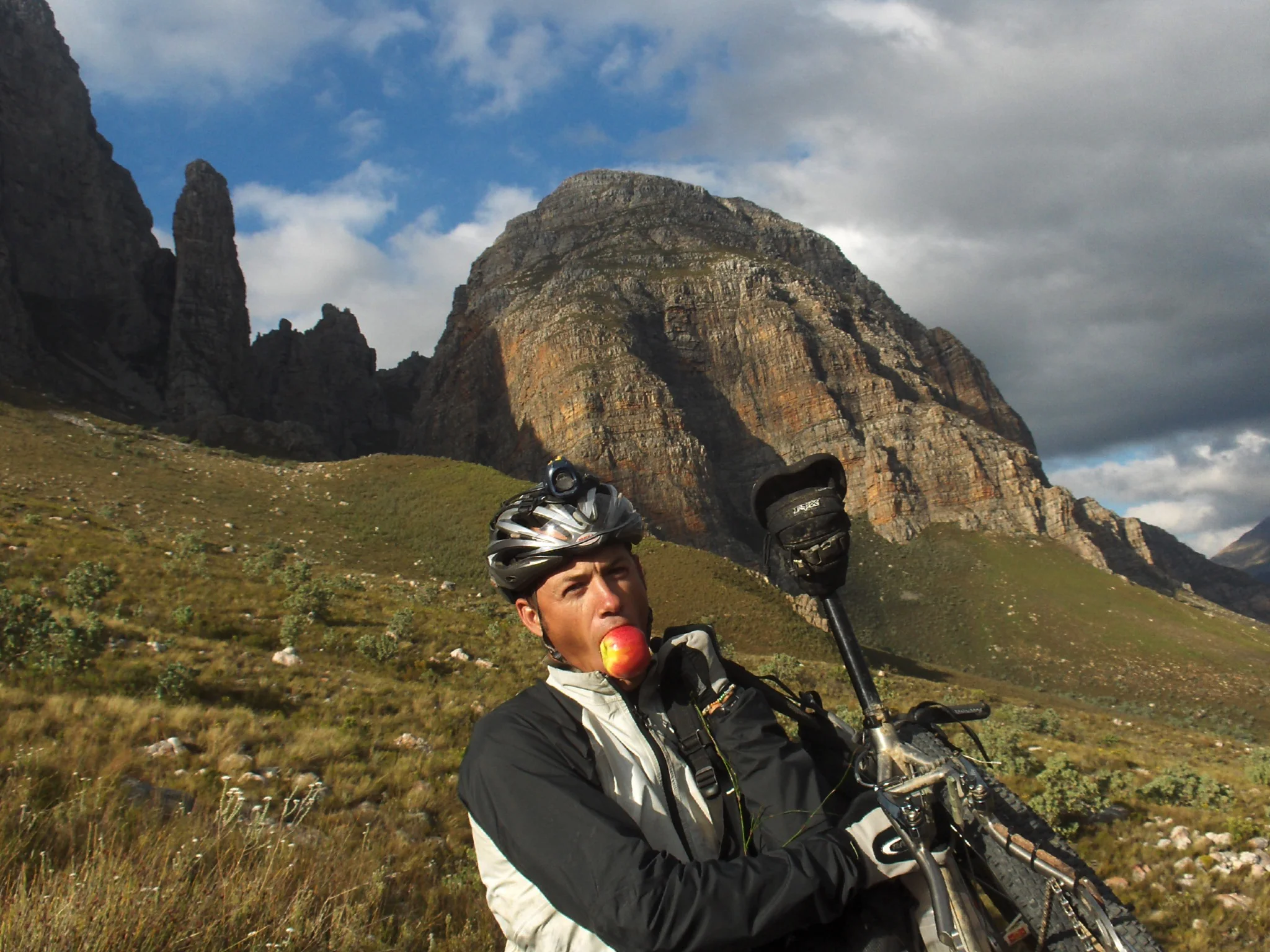
You will cross the last river and rise out from the ravine up a near vertical slope one crawling clawing step at a time. You will lift your bike up above your head and plant it on the steep slope above you, dig in your shoes and take one slippery step up. If you are lucky then the slope will hold and you will progress one meter forward. You will repeat this until you are finally at the top of the saddle. I remember Cornell climbing back down the last meters of the slope to life my bike from my arms even though he was likewise exhausted.
We sat on the saddle and gazed back in the distance to the valley and the dam wall, all now in the shadow of nightfall. In reality this was the end of the freedom race; the psychological finish line had been crossed.

The last 30km to the finish in Paarl was a blur of cement tracks, a long tar assent, and a final fast but loose forestry track to the finish line on the grounds of a wine farm in the Paarl valley. small group of enthusiastic but “tired of waiting” supporters cheered us over the line. I searched eagerly but in vain through the small group of faces for my wife or children. My sister Ellen was there, she had always been my number one supporter. Some photos were taken, a speech or two given, we were each presented (draped actually) with a traditional Basotho initiation blanket by David Waddilove, the organizer of the race, and then it was all over.

That night as I sat safely on my bed at my sister’s house in Paarl, I realized with some alarm that I had no more maps left in my pouch for the next day, that there was no next day. There was no Cornell in the bed next to mine, no bikes stuffed into the room, no rucksack to pack, no maps to study, and I was suddenly overwhelmed by a deep sense of loss. I am not ashamed to say that I wept like a baby before finally falling asleep.
My race may well have been run, but my journey had only just begun.
Afterthought
Many people have asked me why I didn’t break away from Cornell during the last few days and go for a win, although it was rather a question of why Cornell had not as I am under no illusion as to who the stronger rider of our team was. The truth is that Cornell and I discussed this matter a few nights before the end of the race. We had come to respect, trust and rely on each, probably in different ways and for different reasons. Both of us came to the conclusion that it would be an honor and a privilege, (not a strategy) to finish the race together and I am so grateful that we did.
For me personally, I had achieved the goals I had set for myself at the beginning of the event, to win the race and to break the race record. I could go back to my sponsors with pride at what we had achieved together. We were right to feel proud, we had certainly both worked consistently hard, giving our very best all the time. We had made good decisions, and had managed to keep highly motivated for the duration of the race. All this is true, but in reality these were not the real reasons for our success.

- We made it over the last high altitude portage within a few hours of the snowstorm that wreaked havoc among the rest of the field.
- During all my trips over the handlebars, neither my bike, nor my body sustained any race stopping damage.
- Although we nearly did, we didn't actually fall headlong into the icy river with all our kit during the night when the temperature was already below zero.
- The cough and chest cold I picked up in the Drakensberg never developed into the flu.
- Cornell's bike frame, though seriously cracked, actually held out to the end of the race.
- So many "angels" in the form of shepherds, farm workers, farmers and even a priest who spent the best part of his night looking for us in the high Maloti mountains to provide shelter for us, watched over us and gave us help exactly when we needed it.
I recall a conversation we had while having breakfast at Willowmore during which a guest asked us if we enjoy doing these "macho races" We thought quite a bit about this and came to the conclusion that an event of this nature actually doesn’t favor the “macho” attitude.
The Freedom Challenge will not highlight your strengths as much as it will expose your weaknesses. You will need to remain humble, or you will be humbled. Every single day you will be tested to a point where you will need to reach beyond your own abilities, and then there’s still the question of the “angels” and fortunate events.
The Freedom Challenge – Where is it in 2013?
In the 7 years since my last race on the freedom challenge it is evident that time does not stand still, and this is true of the Freedom Challenge. I always knew it would, but there was something romantic about doing a race so big, so silly, so extreme, that only 6 people would consider it. During my race, one person dropping out the night before saying that it was irresponsible of the organizes to run it at all!
Entrants
2006 - 6 entrants
2013 – 53 entrants
In 2013 there were 53 competitors with the start staggered over a period of a week during which batches of about 20 competitors (including riders from the shorter “ride to Rhodes” mixed into the groups) are started. Unlike the dreamers that made up the competitors in my race, the races now see some of South Africa’s top sports men and woman.
Race record
2006 – 17 days 18 hours
2011 – 12 Days 15 hours
The route is still very much the same with small variations from year to year.
Stettynskloof is still part of the course but in a much milder form. There is a walking trail running the full length of the kloof, I know because one of my firefighting teams cut it. The kloof burned through a few years ago cleanly removing all the dense vegetation that made the going so tough. Even though, competitors still find this leg to be one of the toughest of the race.
Regardless of the changes, the Freedom Challenge is still a remarkable race requiring every competitor to reach far beyond his or her own personal limits and abilities. Stories of the race have a strong common theme, almost spiritual in the attempt to explain or even understand for themselves what they have been through, how it has changed them.
There is no doubt that in this race, through this journey, you cannot be the same person you were when the clock struck 7 in Pietermaritzburg however many days previously. You cannot escape been repeatedly whacked over the head by the beauty of the landscape, the hospitality of the people all along the route, the suffering you never thought possible to endure or the strength that bubbled up from deep within you.

You will truly have touched the “heart” of South Africa, discovered the soul of mountain biking. You will find freedom.

"A series of Fortunate Events" (PT2)
For the first time during the race, we overslept.....
Day 7 - Smuts Pass to Gunsteling
120 km
560 m climbing
12 hrs cycling

Freedom race tip # 7 - Advice for men
Make sure that you have had already your full complement of children before this race.
Fed up
For the first time during the race, we overslept. As an unwritten rule in our race relationship, I was the one to get up first and motivate Cornell to get out from under the warm down duvets, not easy after only a couple of hours sleep with temperatures below zero. On the other hand, I would start fading during the last 12km of the days distance when my mind would decide its had enough, push off and leave my body to finish. At this point Cornell was a master of encouragement, he would lift my spirits and get me to the end point. On this cold morning I didn’t even hear the alarm, just woke up when it was light outside.
We rode off in clear skies, thick frost coating the ground, ice clinging to the fence wire alongside the gravel road. Although cold, the riding was exhilarating, good dirt roads led us through vast open plains. At one point, while having a bite to eat alongside the road, we saw in the far distance, a horseman galloping towards us. Dressed in black and with his balaclava pulled low over his face, he created an imposing image as he galloped right past us heading for no place in particular.

Cornell had this thing about food. If a large plate of food is placed in front of him, (as opposed to being able to dish up small portions for himself), he loses his appetite, goes pale and sometimes throws up. On this day he was undone by the generosity of the friendly farm folk along the trail.
Arriving at our support station under a steep portage just as light was fading, we decided to quickly eat, and then push over the potage and on into the night. We enjoyed an extra-large cooked meal provided by the farmers at Elandsburg in preparing for a long cold night on the bikes, headed out up the portage accompanied by the farmer on his trail bike as evening fell. It was dark when we descended the bone jarring jeep track in the dark, I crashed out twice but with no damage to the bike or me.
The valley now in darkness, we studied the maps by torchlight for clues as to what lay ahead. It wasn’t long before we saw the headlights of a pickup searching around on the farm tracks looking for something. It was actually us they were looking for, as they had been tipped off by the previous farmer and told not to let us carry on as they were worried about us riding off into the night with seriously low temperatures forecasted for the area. Generally people don’t realize what you can accomplish on a bike, or at least imagine that you have no clue of the risks or dangers outside. We really wanted to move on, but there was no arguing so once again we gave ourselves over to rural hospitality.

We were taken to their farmhouse, given a room, which belonged to their children who were away at boarding school. We were then quickly ushered into the lounge where a HUGE steaming plate of farm fresh meat and potatoes waited for us. It was really only a few hours since our last meal, and I grinned to myself as Cornell politely tried to turn down the offer. In a typical South African farm kitchen, you eat what' on your plate or face serious consequences. I glanced at Cornell and watched him turn from red to white while he fiddled around the food with his fork. He made at least three trips to the bathroom. I had no problems, but then my friends always did call me “hoover” when we ate together.
Tucked into a warm bed, we heard news that the rest of the race competitors had been caught by the same storm we had experienced the previous day. Unfortunately they were caught high up in the mountains and really suffered for it. Two competitors decided to pack it in and abandoned the race at Rhodes. Quietly we thanked our luck and strategy for moving through the mountain section as quickly as possible, even though it was some of the hardest riding we had ever done.

Day 8 - Gunsteling to Cape Mountain Zebra National Park
150 km
660 m climbing
12 hrs cycling

Freedom race tip # 8 – Asking directions
Team up with one competitor from each official language group.They lied about English being a universal language, although it is useful when reading your cell-phone menu.
Compile a three-page list of recommended answers to the question “Is julle mal!” (are you *&%$ mad!?)
Disregard all directions ending with the words “you can’t miss it”.
Radio Fame
To compensate for been hijacked from our plan to ride on into the night the previous day, we made a 2am start. I can’t even begin to describe the intensity of the cold that early in the morning and a long steep downhill on route didn’t help much either. Around 4am we came to a small town and desperate for some warmth, walked into the only place that was open, the local police station where we pleaded with the duty sergeant to make us a mug of coffee. Although he complained that we were wasting his time commenting that "This is not a 7 / 11”, it was light hearted and soon we were sat on the hard wooden bench, warming our hands around mugs of steaming coffee as the radio cracked a report about a stabbing in the local shebeen.

We were hungry and dreaming of food when we finally reached the afternoon lunch stop, but the farmhouse was deserted. As is typical of rural areas, the house was wide open, but not a sole in sight. I must confess that we did sneak into the kitchen and raid the fridge of some fruit, but there was little else of food value. I thought of our double dinner the night before and wondered if it was not perhaps prophetic.
The rest of the day was lost in a haze of thoughts as the miles slid by. By late afternoon we had entered the Cradock Mountain Zebra National Park, and arrived at the campsite quite early. This was one of only two support stops from which we were not permitted to ride after dark, due to the rules and regulations of the Protected Area. We settled into the camp, did washing and serviced the bikes.
That evening we went to the camp restaurant and were busy eating when a lady at the table next to us leaned over and asked “Sorry to worry you, but are you the two cyclist who are currently leading the Freedom Challenge?” We were really taken aback, especially when they told us they had heard about our progress on a national radio broadcast! I did find myself grinning a little wider and a bit longer than normal.
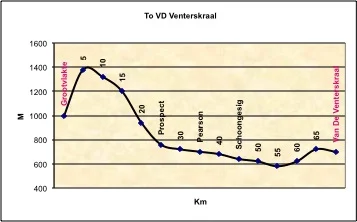
Day 9 - Cape Mountain Zebra National Park to Van De Venterskraal
120 km
1 040 m climbing
14 hrs cycling
Freedom race tip # 9 - Cycle at 85% of your actual ability:
This race is a mental challenge, and is won or lost in the mind, not the legs! So if you are mentally challenged fill out an application form now! No seriously, it’s nothing to do with the legs.
The plains of Camdaboo
Leaving at dawn we cycled along winding park roads mindful of the “Danger Rhino” signs till we arrived at the appropriate dry riverbed marked on our maps where we exited the park through a hole in the fence. As a park manager myself, that felt a bit weird. On the other side of the fence we cycled, pushed, and carried up a short steep track where we were greeted with the vista of the vast plains of Camdaboo stretching out for as far as we could see. The downhill was exhilarating but not completely controllable as the surface was strewn with loose gravel and boulders. My disc brakes paid for themselves on this downhill alone. I can remember the single track to the main gravel road after the downhill as some of most exhilarating of the trip with loads of opportunities to get airborne. Maybe not the best idea with 30kg on your back and more than 1000 km to go!

Arriving at the next support station, a game farm, we shared a huge breakfast with the organizers of the race who were on their way back to Cape Town. It was great to see them and catch up with all the gossip from the rest of the field, the havoc wrecked by the storm in the Drakensberg Mountains, the accusation from the guesthouse in Rhodes where we “stole” a loaf of bread and the woes of those who dropped out of the race at Rhodes. Heading out from the farm, we tackled a long muddy portage up a mountain track, followed by a pleasant “pick your bike up onto your shoulder and hike down a trail” following a long deeply wooded valley, and also climb over a lot of barbed wire fences.

At the base of the hiking trail we were greeted by a makeshift signboard wired to a gate saying “Ben and Cornell, come inside for beer and biltong” We found out that this farmer had also been following the race on the radio, and knew we were heading his way. We felt it would be extremely rude to ignore his invitation, so filled up with coffee (no beers thank you) and left with a week’s supply of fresh game biltong, which we finished the same day.

We had reached the stage of the trip where your body is in a constantly energy deficit state and we (or at least me) unashamedly ate anything and everything we could lay out hands on. I recalled during the previous year’s race, where I had ridden off the track to a farm house, knocked on the door and asked the farmer if he could please make me a couple of peanut butter and jam sandwiches! He did, and I hardly even feel ridiculous at all.
It was still a long way to the next support station, but the riding was wonderful, Karoo farms, sheep (complete with working sheep dogs) and wind pumps all the way. I struggled the last 12km as normal, but with Cornell as my ever faithful coach, we arrived at a large slightly scary abandoned farm house, prepared earlier for out arrival with another monstrous farm meal designed for 5, devoured by 2.
Scary dreams that night.
Day 10 - Van De Venterskraal to Bucklands
155 km
580 m climbing
16 hrs cycling
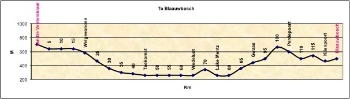
Freedom race tip # 10 - Do not watch your bikes odometer
If a watched kettle never boils, then a watched odometer just never moves ahead fast enough. I found it best to select physical landmarks, such as far distant mountain ranges or other galaxies.
Game of Thorns
This, the 10th day of the race was for me a day dedicated to the “Tube God” and I personally littered the route with sacrifices and offerings. Puncture followed puncture as most of the route was lined with Acacia thorn bushes, 3 to 6 inches of multi-pronged nastiness. Impossible to avoid, growing in the track, on the shoulders, creeping across and lying in clusters everywhere a tire could turn.
As a result, it was a long frustrating day for both of us as Cornell waited patiently for me through my “tube god” sacrifices. Cornell had invested in tubeless tires for the race, and it was uncanny how well they worked. He would stop, wrench out a 4 inch spike imbedded to the hilt in middle of the tire which would then emit a small “psst” a split second before the tire sealed, spin the wheel a few times off he would go. I had thick plastic tire liners and slim, but I might as well have used party balloons for all the protection they afforded. I think the only thing that would have worked was if I had beat a ring of sheet metal around the outside of my tires.

Beside the punctures, we had to negotiate a number of portages and some pretty confusing navigation. This was game farm country, and every farm had high fences and locked gates. The fences were over two meters to stop Kudu and Eland from escaping. Both species, regardless of their weight will happily clear a 2 meter fence without a run-up. I have seen it first hand on one of the nature reserves I have managed, and recall that at the time my brain couldn’t quiet come to terms with the images been received from my eyes so it all looked very much like a movie in slow motion.
I felt a little uneasy as I knew game theft and farm murders were not uncommon in this isolated area, and all the farmers are heavily armed with hunting rifles and shotguns, and certainly not shy to use them. Climbing over the 2,5 meter locked farm gates (usually two gates tied end on end on top of each other) with a bike is quite an art and for the first time during the trip while helping Cornell with his bike I realized just how light his bike was! His frame was made of titanium, and what a difference the weight must have made during the portages and climbs.

Cornell's titanium frame bike
Now already late into the night, we were negotiating yet another farm gate and making a fair bit of noise about it, when a light came on from the house next to the fence, and the next instant the quite of the night was shattered by a series of violent explosions as blasts from a high powered rifle sent bullets whizzing above our heads.
The hell with dignity and composure, we hollered at the top of our voices “Don’t shoot! Don’t shoot! We are cyclists!, we are in a race!” as if that would actually have meant anything! Nobody answered us and we didn’t stick around for introductions, all I remember was that our riding average improved quite significantly over the next few km’s. Later that evening we were met by the farmer owners from our next support station. They had become concerned about us and came looking. Their offer of a ride for the last 15km to the farm was tempting, we had already done 130km and it was late, nobody would know or care really if we cheated these few km as we were now days ahead of the rest of the riders behind us.
Of course we didn’t, instead we rode in front of the pickup and used their headlights to light the way. The problem was that we felt a bit guilty at holding them up from a warm house and rugby match on TV, so we upped the pace and ended up riding the last 15km at a ridiculously fast pace, arriving at the farm completely spent.
Hospitality once again surpassed all our requirements, and we fell asleep well after midnight, warm, full stomachs and smiles all round.
Day 11 - Bucklands to Cambria
100 km
880 m climbing
13 hrs cycling


Freedom race tip # 11 – Beware the dotted lines:
Dotted lines on the map represent field trips. These field trips however have nothing whatsoever in common with field trips undertaken at botanical gardens or during corporate workshops.
Break a leg!
I lay sprawled out on my stomach on the steep boulder strewn slope, my bike lying upside down against a rock further down the slope, front wheel spinning aimlessly. A light rain had just started to fall, and an icy wind blew the drops under the hood of my rain jacket. I tried to sit up but as I moved my leg a stab of pain shot through me like an electric shock. We happened to be in one of the most isolated areas of the route and daylight was fast running out, thoughts that didn’t escape me. A cold clammy sweat broke over me and I fought back waves of nausea that threatened to engulf me.
We had left at daybreak that morning looking forward to what was one of the highlights of the trip, entering the Biviaanskloof wilderness area. This area is an amazing mountainous area full of wildlife including three of the big five, Leopard, Rhino and Buffalo. We entered not through the conventional route taken by tourists, but by a deserted management track snaking down into the very heart of the wilderness area, miles from civilization or park infrastructure.
The trip down into this kloof involved a climb over a rusted green gate and then following an abandoned rutted track which snaking steeply down to the river invisible in the distance below. It was beautiful and I was reveling in the realization that we were now so far ahead that we were not only heading for a win, but also a new race record.

With that sweet thought, I lost concentration just long enough for my front wheel to slip into a deep erosion rut running parallel in the track. The section was a very steep, and the bike was forced off the track and went plummeting uncontrollably down the mountain slope. Blurred boulders, laws of physics, over the handlebars, the dull sound of flesh smashing against rock and then all was quiet, except for the whistle of the icy wind through the brush. Cornell, who was slightly ahead of me rounded a hairpin bend in the road, said he heard something on the slopes above him and was surprised to hear me calling out to him. On closer inspection he found me lying in a heap among the rocks and vegetation. I was a bit put out when he raced up the slope straight to my bike and after examining it in what I thought was an unnecessary amount of detail, finally proclaimed in joyful relief “Its ok! Your bike’s ok!” But then who can blame a guy who has his priorities sorted.
My prognosis was not as good, and while we did decide that my leg wasn’t actually broken, I could not put any weight on it, nor could I complete a full revolution of the pedals without excruciating pain. The problem was that there was no help even close, and to go back would have been worse than going ahead. With the cold, rain and daylight running out, staying put was not an option. So we continued on the long decent to the river valley below, every km taking us further and further from any help or support. I found that I was able to pedal with only my right leg and still keep moving and so forward went.

Once down in the river we were confronted with a flooded road, and during the next few hours carried our bikes through knee and sometimes waste deep freezing water. I seem to remember that we crossed the river 9 times, some crossing being as long as a few 100 meters. This was real wilderness, absolutely beautiful and we saw species of game at nearly every corner.
The pain was severe, but worse was the realization that this could be the end of the race for me. We were still only half way into the race and now the really long distances were about to begin. I was not a happy camper. With Cornell’s constant encouragement and support we made it over the highest gate I ever had to climb and rode the last few hours to the guesthouse in the dark. I think that both of us realized that I would probably not be able to continue the next day, but none of us said as much. The route was going to be one of the toughest of the race with huge climbs and extreme distances to cover.

Cornell gave me some Myprodol, which was like morphine to me who never even takes as much as a headache tablet, and some arnica ointment to rub on my leg. It took about 15 painful minutes to get myself onto bed and my leg under the blankets and with a feeling of desperate disappointment; I fell into a deep sleep.
Day 12 - Cambria to Willowmore
160 km
1,460 m climbing
16 hrs cycling


Freedom race tip # 12 – Interact with the locals:
Taking the time to interact with the locals will enrich your experience of the race, help you to develop an understanding of the rich cultural diversity existing in our country, and open your mind to the local knowledge of the area.
For me, the common thread of local knowledge expounded to me throughout the route went something along these lines: “The turn off you are looking for is just at the top of the 20km downhill you have just come down”
Break a bike!
When I woke that morning I lay very still for a long time, not really wanting to face the decision I would need to make. While I didn’t know, I still had hope. Eventually I moved my leg, and it was as if a miracle had taken place during the night, Most of the pain had simply disappeared. I can’t express the elation I felt just knowing that I had been given an opportunity to continue, that’s all I ever really wanted. Disaster had once again given way to hope, hope to resolve. I was still in the game!
It is interesting that throughout the remainder of the race I suffered no ill from my leg other than a dull ache during the first day, but one morning a few days after the race was over, I woke to the same excruciating pain, which lasted throughout the day then disappeared. “Deferred injury”, weird.

Yet another epic days riding in all aspects with over 170 km of some of the steepest climbs and descents of the route as we traversed the length of the Biviaanskloof mountain range. My spirits were soaring, not only because of the rugged wilderness we were passing through, but for the sheer relief of been able to continue. This was it truly a gift, in fact a birthday gift to me sent one day early.
In contrast, Cornell, was having a day of real concern when he discovered to his horror that a hairline crack had developed in his bikes titanium frame just alongside the weld on the bottom tube. This was a serious situation, one that would have us both examining the crack at regular intervals during the remainder of the race debating whether it was getting worse or staying the same. Besides the physical risk to Cornell if the frame failed suddenly en route, it could put Cornell out of the race altogether. To reduce the risk of ending his race, Cornell managed to organize that his second bike be flown down to Cape Town where it could potentially be delivered to him on the trail in the event of total frame failure. We both prayed that this would not be necessary, as the 24hr time penalty for this level of intervention would put the race record out of his reach.

During the day I took stock of my physical situation. Sitting on the saddle had now become an awkward business, so I tried to stand on the pedals as much as possible. I would delay sitting down as long as possible, changing to a lower gear and keeping most of my weight on my legs. The problem was that my left leg, bruised in the fall would start to protest, and then my right knee which I injured in the Drakensberg would start giving in. Eventually I would have to sit down, trying to find the best position out of an unhappy blend of raw skin, welts and bruises. I would just settle down to the best of the worst, when some or other obstacle in the track would require me to stand up, and the whole unfortunate process would repeat itself over again.
It was also the day that I discovered I could sleep while riding a bike. On one particular section towards afternoon I found I was struggling to keep my eyes open. At this point the road was good dirt, wide and either level or trending slightly downhill. The pickups using the road had left two smooth compacted wheel tracks lined with loose gravel on either side. I noticed that when I drifted onto these looser sections there was different feel and sound and this formed the basis of my bike sleep strategy. So by building up speed or on a slow downhill I would center my bike in the smooth section, close my eyes and blissfully dose off until the bike wandered onto the shoulder where the different noise and vibrations would wake me from my snooze. I would re-center the bike and do it all over again. Many times I was able to re-center the bike without actually opening my eyes. I can’t imagine I ever dozed of longer that 15 or 20 seconds at a time, but after 15 or 20 minutes of it, I felt pretty well rested.
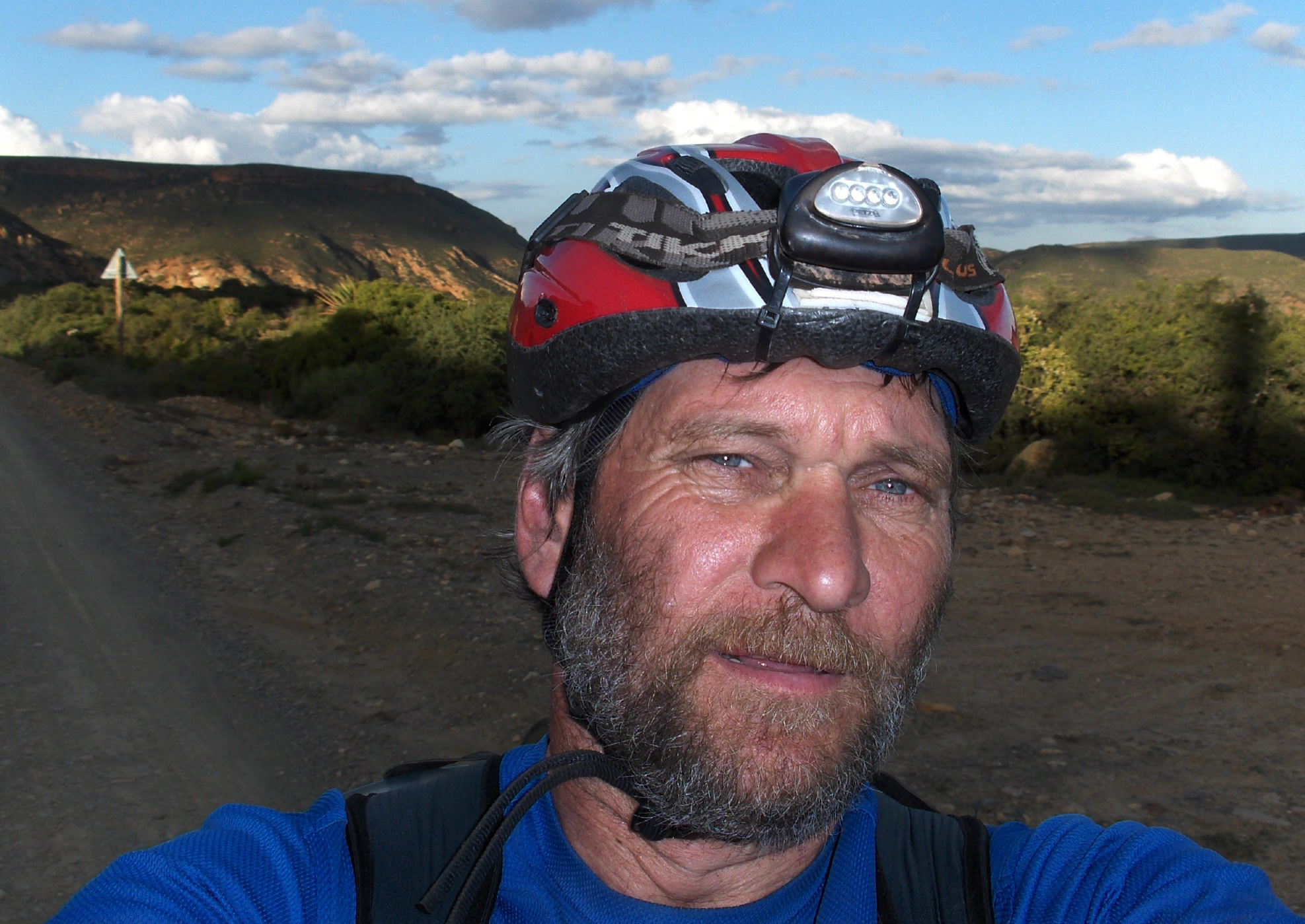
The last stretch to Willowmore was a long series of climbs, and we were well spent when we finally arrived in the dark at our support station in the town. Our work not quite done, we first underwent some “medical monitoring” conducted by two postgraduate sports science students who were using us to monitor the effects of extreme exercise on the body. They were quite astonished by the rapid weight loss we were experiencing as a result of the sustained efforts and rigors of the trip.
Despite eating like a weightlifter, I lost 7kg during the race.
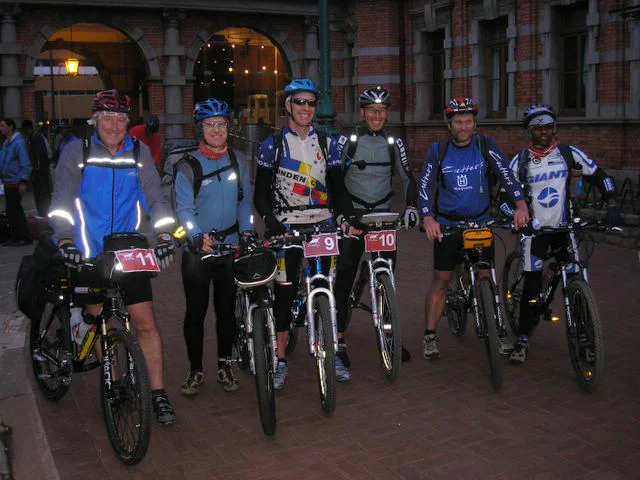
“A Series of Fortunate Events” (PT 1)
Both water bottles on my bike were frozen solid,.......
My personal perspective of the 2006 extreme mountain bike race across South Africa, “The Freedom Challenge”

Finding the soul of South Africa
Both water bottles on my bike were frozen solid, the tube to my hydration bag standing out like a piece of ‘bloudraad” (fencing wire) next to my shoulder. My hands were dead, and acting like a propeller was no longer having anyeffect. My speech was slurred, and I stopped thinking. I knew we were in trouble, but all I could do was rest my head on the handlebars and drift off to sleep.
“There’s a light! come on Ben, lets go!” said Cornell, fumbling with the gate catch. We both scrambled up the hill in the direction of the light. In the doorway of a small mud hut, the silhouette of a lady danced and swayed in the flickering glow of firelight coming from inside her hut. We could almost feel the warmth, comfort and safety of the fire when the door slammed shut, the bolt sliding home with a loud “thunk”. Dignity thrown aside, we stood at the door knocking, begging and pleading to be let in, but no amount of self humiliation could entice her to open her door to the two alien creatures she had seen running towards her that dark morning, skin alive and glowing (reflective tape) life support system (rucksacks) and a single evil white eye shining out the middle of our forehead (helmet LED)! Peeping trough a crack in the door, I could see her standing in the middle of the hut, hands clasped protectively in front of her trembling with fear.
With a creak of well-worn hinges, a door from the neighboring hut opened, and a lady, unaware of our presence, stepped out into the dark to empty a bucket into the frozen air. We needed no prompting and discarded all manners as we pushed past her and headed like a magnet for the small wood-burning stove in the middle of the kraal. With eyes closed, we crouched next to the stove and held on to the hot stovepipe as if worshiping a strange idol.
At some stage through the haze I felt a wooden crate gently pushed under me, and sank gratefully onto the bare planks. Again and again small pieces of wood were pushed into the tiny stove, while not a word was spoken.
Slowly, the warmth and comfort of the fire began to thaw my mind and I became conscious of pairs of wide bewildered eyes staring at us from all around the circular hut. Looking around, I saw that we were in the middle of a hut surrounded by an extended family of about fifteen people of all ages, huddled under blankets, hessian bags, newspaper, and coverings of all sorts of materials. After a time, we got up stiffly, mumbled our thanks, walked on stiff legs out of the hut and back onto the frozen steel of our bikes. We learned later that an escaped convict had recently terrorized the very same community.
It was 4 am.
Though not a single word was spoken during the incident in the hut, I will never forget the understanding, courage, compassion and generosity shown to us by that lady on that cold morning high in the mountains.
I had once again, experienced the “soul” of South Africa.


The Freedom Challenge is an extreme mountain bike race across South Africa, stretching from Pietermaritzburg in Kwa Zulu Natal to Stellenbosch in the Western Cape. The 2,300km route consists of gravel roads, two spoor dirt tracks, single cattle tracks an numerous portages where no tracks, paths or trails exist.
The route has been designed to pass through as many areas of natural beauty as possible, incorporating a number of nature reserves and conservation areas. The race is run during the middle of winter over some of the highest mountain ranges in South Africa where cold fronts and snow storms are a certainty at some stage of the route.
Why?
From the moment I first heard about the race and studied the details I knew that this was my race, a package of every experience gained through my life up to that point, the familiar stained and frayed jersey you love to wear around the campfire.
• It is unsupported, so once you start you are on your own in terms of decision making and basic survival.
• It is not a team race, although you are permitted to collaborate.
• It is nonstop, so although there are checkpoints at farm houses about every 100km or so, you choose if, when or where to stop, eat or sleep.
• The rules manual is one paragraph long, a paragraph longer than the safety regulations.
• No technical equipment such as GPS are permitted and the route is marked as a line on a series of orthophoto maps, low tech with high probability of getting lost on a daily basis.
• The outcome of the race is reliant on the integrity of each competitor to diligently follow the route and the rules, not catch a lift in the back of a pick up or take one of many possible short cuts.
• There is no prize money, the reward, a traditional Basutho initiation blanket, or a traditional whip with a maximum value of $30.
Bragging rights however, are pretty awesome.

Part 1
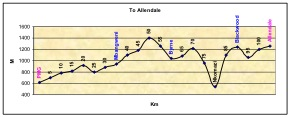
Day 1 - Pietermaritzberg to Allendale
105 km
1,980m climbing
11hrs cycling
Race tip #1: - Pack light:
It is amazing how generous some competitors became after the first day of the race, donating to the locals on a scale only exceeded by the National Red Cross Organization.
Start
This epic adventure started from the city hall in Pietermaritzburg as the church bell tolled 7am. Of the six of us who pedaled away on that Saturday morning, only four would cross the finish line in Paarl, some almost a month later.

Left to right; Greville Rudock, Geritt Pretorius, Andre Britz, Corness van der Westhuizen, Ben Swanepoel, Zolani Mtshali
The first day was a good introduction to the race, with some big climbs, a few short portages, river crossings and a jumble of forestry tracks. I planned to take it easy on the first day and only went as far as the first support station, 105 km from the start.

It was good to get going after so much anticipation, preparation and training, a bit like a scuba diver finally hitting the water and feeling the equipment and gear, so unwieldy on land, come into their own. It’s a tough first day but I felt relaxed and confident that I had a solid strategy to at least, break the record and didn’t heed the temptation to race after the guys running out front.
Meanwhile, on a very different strategy, Cornell Van Der Westhuysen, an architect from Johannesburg and an experienced long distanced cyclist blasted ahead to the first support station, stopping only for a quick bite before racing towards the second stop at Ntsikeni Nature Reserve another 90km away.
I enjoyed an excellent farm meal and settled in for an early night, fully aware that according to my careful planning and strategy, my personal race would begin in earnest at 1:30am, only a few hours away.

Day 2 - Allendale to Masakala
160 km
1,620m climbing
21hrs cycling

Race tip #2: - Obtain the handbook “Understanding Race Director language”:
For example:
• “It will take you guys 45 mins to do that section, max.” = It’s going to be a long cold night under the African skies.
• “Its do-able” = It can be done, as long as you are in a mode of transport that has an SAA sticker on the side, a day consisted of 48hrs, contour lines are measure in seconds, not meters, and all tracks marked on the map actually do exist on the ground.
• "Tomorrows cycle leg is really a non event" = Tomorrow you will be cycling more than double your normal distance, as we could not find a suitable support station in the area. You will probably blackout from sheer exhaustion, and not remember a single thing about the day.
• “Stettynskloof is going to kill you” = Stettynskloof is going to kill you. (see later)
Break Away
01:30 am saw me quietly dress and slip out into the crisp cold air, my secret betrayed as I almost ploughed headlong into a cow standing silently in the middle of the entrance road. It felt good to finally be alone, and for the first time this race felt real. Navigation proved a lot easier on this section than the previous year and before long I was on the winding forestry switchbacks leading up to the fist mountain portage to the Nsikeni Nature reserve.

On arrival at the lodge I was completely taken a back to find Cornell relaxing outside on the porch with no sign of preparations to move on. Over a quick lunch together, I heard how he had been caught by darkness the previous night while negotiating the portage, and had spent the night on the floor in a shepherds hut, waking during the night to the scurry of cockroaches covering the thin blankets given to him. Greeted to sharp stabbing pains in his knees that morning, the enormity of the race sunk in and he decided to abandon his original strategy and spend the day waiting for the rest of the competitors to arrive. was ready to move on, but after some discussion we realized we both had a very similar strategy in terms of actual distances and days, and decided to ride together at least for the next few days. In actual fact, we ended up riding together for the remainder of the race, the single best decision I made during the entire race.

For the rest of the day, we rode hard. The first few days of this race are incredibly difficult, mainly because your body is still adapting to the distances and sheer brutal effort that will soon become pare for the course. The only time I honestly thought about quitting was during those first two or three days.
I remember very little of that evening other than we struggled to find the village where our guest house was located. How we found it, what the rooms looked like, what we ate is still a mystery to me even though I can still easily recall every smell, taste and feeling of the remainder of the race.

Day 3 - Masakala to Vuvu
125 km
1,200m climbing
18 hrs cycling
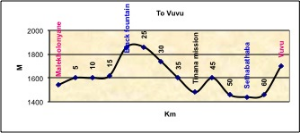
Race tip #3: - Nutrition Come into the race a few kilograms over your ideal weight.
During the race eat everything and anything you can get your hands on. Steal food from kind trusting country folk, your competitor’s rucksacks, and out of farmer’s lands alongside the road. Bang on doors in the middle of the Karoo demanding peanut butter and jam sandwiches.
At support stations, sneak into the lounge under the cover of darkness and remove (completely) all fruit from the creative display on the coffee table. Do not feel guilty. Very importantly, stop this behaviour immediately on completion of the race.
Heading for the berg.
Mentally and physically, this was the hardest day of the race for me (other than Stetynskloof of course). My motivation levels faltered at the mere thought of the physical effort and pain I knew would be needed to complete the daily route, and I started doubting if I really did have the mental and physical stamina to make it.

At one point I think Cornell realized how I was feeling, and he made me eat a couple of energy gels in spite of my weak protests. It’s just amazing how often a shortage of food (fuel) caused my motivation to plummet. Within a few minutes I was a new person. Food, or lack of decent nutrition, was a major issue for both of us on this day, and we suffered for it.
We rode hard the entire day, trying to put distance between ourselves and rest of the field at this early stage of the race when we knew everyone would be suffering and struggling to adapt to the demands of a race of this nature. We both paid some “toll fees” for our efforts, I managed to crash off the path and injure my knee which has never completely recovered, and Cornell went over the handlebars straining his wrist.
Navigation during this section of the route is notoriously difficult, and later that night, in coal black freezing conditions, we lost our way and had to negotiate a steep cliff, only to come up against a strongly flowing river. After searching the bank for a way over, we came to a reasonably flat stretch of water about 20m wide, and started wading across. Halfway across the frozen water, the firm sand bottom gave way and with shouts of alarm we were both swallowed up to our thighs in porridgy quicksand. We literally had to throw our bikes across to the bank and somehow managed to get across to the opposite bank without falling headlong into the icy water. I do not want to think of what would have happened had we soaked our bodies, clothes and kit in that water, with the air temperature already well below zero.
A few hours later, and utterly exhausted from climbing impossibly steep tracks, an “angel” in the form of a Catholic Priest from one of the mission stations drove up to us out of the blue with news that our designated support station was deserted. He had been searching for us for hours to give us this news. It was now close to midnight as he started banging on doors, eventually organizing for us to sleep in a shepherds hut. Blankets were quickly loaned from a neighbor and a small shop opened for us where we bought bread, bully beef, baked beans and yogurt.

I will never forget looking at a shelf of the shepherds one room hut, noticed that he had only one knife, one spoon and one plate, yet he was so generous to us. everything he had, he made available to us. Somehow, I got the spare bed, and Cornell the floor.
It was well after midnight when warm, safe, fed and dry, we fell asleep trying not to think of the 1 000m high portage over the Lehana pass that waited for us the following morning.

Day 4 - Vuvu to Rhodes
50 km
1,160m climbing
10 hrs cycling

Race tip #4: - Standard toolkit:
If the farmer’s toolkit consists of “bloudraad and tang”, then the freedom challenge toolkit must consist of “duck tape and a multi tool”. I used duck tape to create a new sidewall for my tyre; Amy used duck tape to repair a competitor’s knee joints.
Other uses include:
Waxing your legs (stick on, rip off),
Pain killer (Sniff the sticky side)
Competitive advantage. (Tape your competitor’s bike to his bedpost, and then slip out in the middle of the night)
Lehana Pass

The Lehana pass portage was one of the highlights of the route. A 1 000m elevation hike over the Maluti mountains following an infamous trail used by cattle thieves to bring their stolen goods on hoof into Lesotho from neighboring South Africa. The trail joins the gravel road at the top of Naudes neck, at 2 500m one of the higher mountain passes in South Africa. During the previous years race I had suffered as the weather closed in, driving temperatures down into the minus, reducing visibility to a few meters while we scratched around blindly looking for the trail in the growing darkness. It was only with the help of some shepherds crouching in a storm shelter that we finally reached the gravel road, and which point our troubles had only just begun.
This year however, everything was different, the weather was crisp but clear, the trail plain to see in the clear blue skies and my body finally in sync with my mind. We had finally become a team.

In warm sunshine, we pushed, pulled and carried out bikes up the ridge with all the Southern Drakensberg falling below us. Soon we were over the ridge and absolutely flying down Naude’s neck, where ice still clung to the rocks on the shoulder of the gravel road.
We reaching our support station at Rhodes in broad daylight and decided to celebrate the first big landmark of the race at stay put. It really was a well-deserved luxury and we bought a handful of sweets at a local shop to celebrate. We washed clothes, cleaned our bikes and soaked in a hot bath massaging our spirits for the next leg of this amazing race across South Africa.

Day 5 - Rhodes to Loutebron
125 km
1,080 m climbing
16 hrs cycling

Race tip #5: - What spares to take with:
Due to the high degree of technical advancement made on mountain bikes over the past few years, selecting the correct spares to take on a race of this nature has become a science in its own right. Based on my own valuable experience, I would recommend that the following hi-tech, ultra specialist items be included in your spares list:
• One bicycle tyre (Any old one will do)
• One standard bike cable (Price R7.00)
The chill before the storm
Now well ahead of the rest of the field and feeling stronger every day, we set out to make the most of our hard earned advantage. Climbing out of a warm bed in the middle of a winters night at altitude is not the easiest, but my “Just like heaven” ringtone helped.
Breakfast was a quiet affair, as we were the only guests stupid enough to be enjoying a hearty breakfast at 01:00 am. We later heard we had been accused of steeling the extra loaf of bread that went missing from the walk-in pantry at pretty much the same time as we were having breakfast.
At 02:00 under a charcoal canopy punctured with pinholes of a billion pulsating stars we set off, totally overwhelmed by the spectacular majesty of a night sky in its fullest splendor. What we failed to realize, was that the temperature was already well below freezing, (reported later as -9 degrees) and that as we descended into the long deep valley it would drop even further.
The wind chill factor of freewheeling downhill at over 30km per hour would cause us the pain and agony that left us crouched on a crate with hands glued to the wood stove in the middle of the shepherds hut. One moment disaster and the next, relief, such is the pain and pleasure, passion and dreary slog of racing the Freedom Ride. It is an emotional roller coaster ride in every way.

Another 110km of gravel road, two mountain portages, a shredded rear tire, and one day’s music rations, filled the passing of the sun. Cornell had raced ahead, and I rode alone for much of the day which was very enjoyable. I did wonder if he had actually broken away from me to race ahead but I didn’t mind, I had a pretty good race strategy, I was on schedule, feeling strong and had the advantage of knowing from the previous year what was still to come. found Cornell relaxing at the next support station and as soon as I had eaten, we took on the next portage over the mountains via a firebreak into the next valley just as darkness fell. We were keen to do the next portage in the dark anyway, but once again found ourselves at the receiving end of the mercy of “angel’s”. This time in the form of Japie Smith and his wife, who refused to allow us to proceed, insisted on taking us into their home. We had only come to them seeking local knowledge, but ended up giving ourselves over completely to the warm hospitality of rural South Africa.
Drugged on the contentment of full stomachs, clean clothes and warm fires we listened to Japie’s exploits on his trail bike, which he has adapted into a hill climber, complete with a trucks flywheel as a rear sprocket!
His favorite trick is to invite the city hill climbing trail bike clubs to his farm on weekends to test their high tech machines, and then, wearing shorts, long socks, vellies and a bush hat, “chug a lug” up near vertical mountain slopes and slabs of rock alongside the ”official” smoothed out hill climb as if on a Sunday paper run. He said he had some photos in a magazine to prove it, but I didn’t need to see to believe, not with Japie.
Blissful sleep.

Day 6 - Loutebron to Smuts Pass
120 km
880 m climbing
14 hrs cycling

Race tip #6: - Map Pouch:
Have some system whereby you can keep your daily route maps handy. You want to be able to check them while on the move.
Actually know how to read a map.
Storm
Cornell is an amazing navigator, probably something to do with well-developed spatial orientation due to his work as an architect. He always knew exactly where we were, except for today when during the early morning portage, we inadvertently descended the wrong valley. Although we didn’t loose much time as a result, it bothered him for the rest of the day.
It was also the day that the storm struck.

It started fairly mildly that morning, covering us with an icy mist as we neared the top of the porterage. Descending, we broke out the clouds, and it looked to be a cool cloudy day for our 115km trip to Smuts Pass just past Dordreght. We got all excited when we saw a few snowflakes drifting lazily down onto our clothes, laughing as we thought how we would report that we “cycled in a snowstorm!” Half an hour latter, the clouds released a carpet of thick silent snow, blanketing the landscape, our clothes and th road ahead. For the rest of the day, we cycled alternately through gently falling snow, icy wind, or freezing rain. I loved it, an amazing experience, silent, muffled movement.

Stopping at a Police station in the small settlement of Rossouw to confirm our navigation, we were summery detained without trial by the Station Commander, having to serve a sentence of fresh coffee, and a huge cooked lunch of venison and potato salad. We eventually received a pardon, and left with a suspended sentence of sandwiches, biltong, fruit and too many other goodies to mention, or to find the space to pack!
With evening, came the cold, not just an unpleasant cold, a life threatening numbness. Because of the minimum space and weight we could afford, we only had cold weather clothes to keep us warm while we cycled hard. The moment we stopped, the cold became desperate. Stopping for more than a few minutes was not an option. Riding off into that dark cold night with not a single light or landmark was a matter of faith, not confidence, and I remember making a mental note of the position of a hay stack I saw flashing past my headlight, thinking that we could always take shelter among the bales. At about 10:00 pm, we finally saw a light in the distance and after fumbling around in the dark being misdirected by a well meaning shepard arrived at the support station, an old colonial styled lodge.
Our experience here, after the extreme cold and uncertainty of the days ride, can only be described as fantasy. I will never forget the incredible sense of inner warmth and peace we felt, sitting on the floor in front of the huge log fire, a plate of hot food in my lap. Around me, the comforting “buzz” of a family quietly busy with the normal things that normal people do in a million normal homes around the world.
Although late, we somehow found the energy to service and wash our bikes, wash clothes and prepare for an early morning start. Sleep beneath a mountain of soft down came easy and sweet.

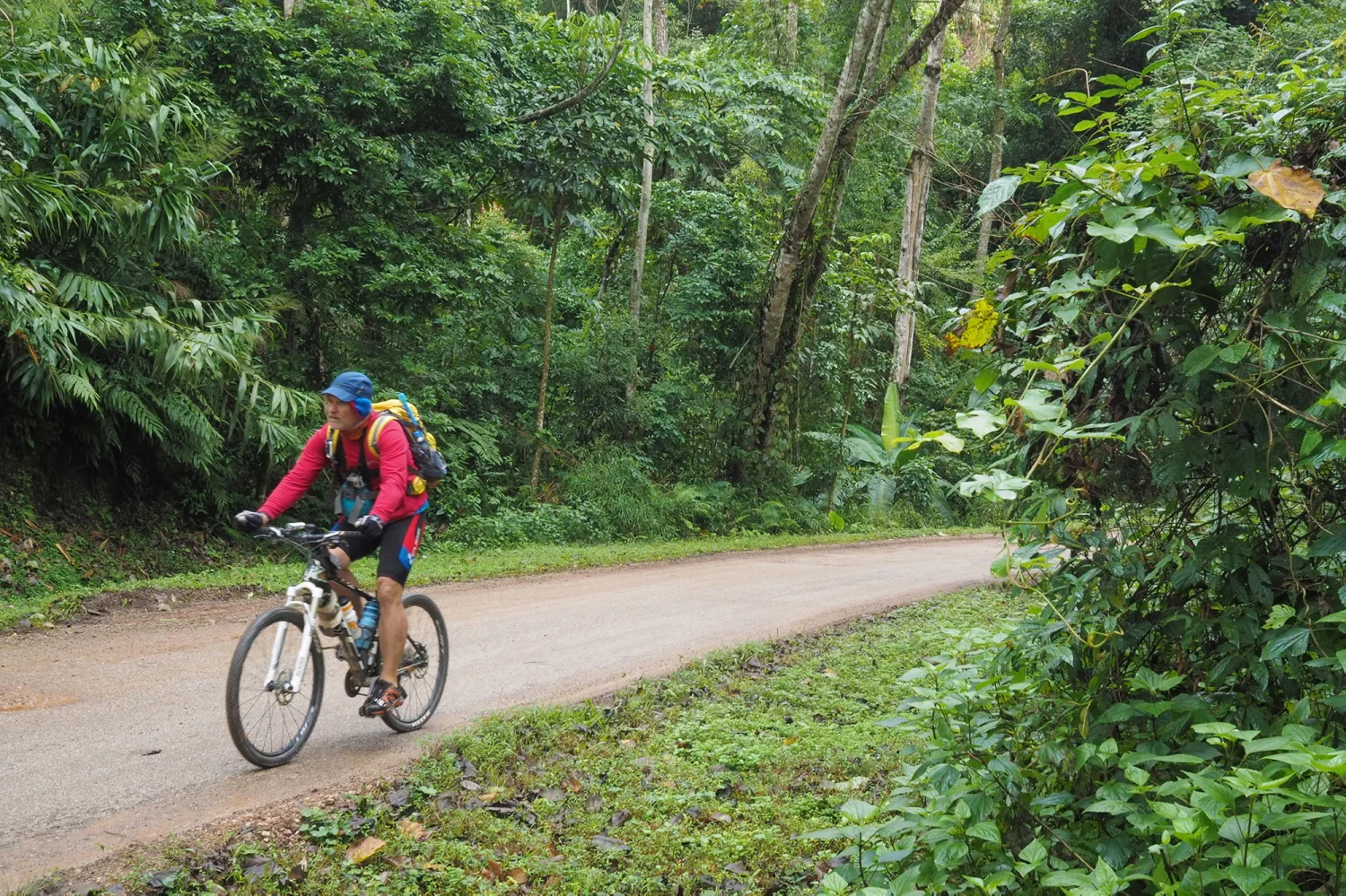
2015 Year end cycle. - Paksan to Oudomxai (Laos)
My cycle trip up to the North of Laos from Paksan to Oudomxai during 2015 new year.

The Idea
So its December 26 2015 and I have decided to go on a nice week long end of year cycle trip up North. Never really seen these areas, so looking forward to some surprises along the way.
Also going to keep it "relatively" low teck on this trip for a change, no internet access phone, one single fixed focus lens, one battery, one memory card, ok...and an e reader.....and a GPS.

My proposed route up north

Not exactly NO tech, but definitely LOW tech by comparison.
Day 1 - 27 December 2015
Paksan to Namphaeng - 115 km, 650m accumulated elevation.
Pleasant relatively easy day along friendly roads, hot. The last time I travelled this section on my motorbike about 4 years ago, the tar sections were all dirt and the dirt sections all tar which points somewhat to the level of maintenance in relation to the construction of new roads.
I made an absolute rookie mistake of fitting the bike with a new saddle at the start of a long trip and struggled during the day to find the right settings. This mistake would cause me immense pain and suffering during the trip, almost causing me to pack it in altogether in the days to come.

Irrigated rice planting during the dry season on the way to Ban Thasi

Wooden suspension bridge provides access to a small village on the way to Namphaeng
Day 2 - 28 December 2015
Namphaeng to Phonsavan, 119 km distance, 1380m total accent
Poor saddle and wrong position wrecked my knee and gave me open blisters on the part of my body in contact with the saddle!. Not fun I can tell you. Both pairs of cycle shorts, vaseline and Nivia could not even prevent this. The day was a bit of a nightmare really, don't know how I managed to to get in, but I did. Grave concerns about continuing the next day, mainly due to my knee.
The route was ok, if a little dull with long hot climbs on wide tar road, not the best, but still great to be outside. Coming into Phonsavang I could see the mountains rising above the road in the direction i would be going the following day. Good diner at "Craters" the restaurant opposite the UXO (unexploded ordinance) headquarters in a town routed in the history of "the secret war"

Hmong girls dressed in traditional clothes for a local ceremony in their town.

Road side villages cling to ever eroding river banks.
Day 3 - 29 December 2015
Phonsavan to Ghot Lieng, Distance: 97.8 km, Total ascent: 1,714 m
Finally found the sweet spot with the saddle, and immediately felt the relief on my knee. As long i kept it in riding position it was fine, anything out of that arc was not. Sitting is still Agony.
Riding was good, loads of climbing and quite cold, with a low mist settling in towards the afternoon.
There was no guest house in the villages I passed, but a young guy offered for me to stay with him and his family for the night. They had just lost their father a month earlier and were still struggling to pick up the slack left by him. They did try to get me drunk on "Lao Hi" but only half succeeded.
Always a humbling experience to be saturated by the generosity and hospitality of people who can barley afford to care for their own needs. My personal motto in these situations:
"Rely on the kindness of strangers, but quietly leave double the normal guest house rate on the counter on your way out"

This guy insisted on showing me his "secret war" battles scars, and his papers of commendation for bravery.

Nice to be back in the mountains again.
Day 4 - 30 December 2015
Grot Lieng to Nam Nern, Distance: 42 km, Accent: 409 m
I know, I wimped out, but really, i just could not sit down without ccursing and i was worried about the sores getting septic. I decided to rest out the day after a short ride, mostly uphill, but with a welcome standup 18km downhill into the town of Nam Neum with its one brand new guest house.
The ride itself was really quite beautiful, wet and silently misty in the morning, men huddling around wood fires watching the woman work, the mist clearing as i dropped down towards the river. Small Hmong settlements, houses strung out like wooden beads clinging to the side of the road, life lived as much on the road as off.
After a breakfast that was not noodle soup, I slept for three hours solid before doing some washing and servicing the bike. Visited the chemist and stocked up on more plasters and vaseline.
Exhale.

early morning mist and rain high up in the mountains, just before the long downhill.

Some welcome R&R in Nam Nerm town
Day 5 - 31 December 2015
Nam Nern to Meung hein Distance: 67 km, Accent: 1,550 m
Fantastic ride today,hard work with lots of climbs but well managed, narrow winding roads and big vistas, ample reward for the climbing.
I left without breakfast to make an early start, and then struggled to find a village with someone prepared to make me something to eat. Ba-na-na! and crackers came to the rescue.
Thick mist forcing me to pack away the camera and haul out the rain jacket at times in the morning, but better than the searing heat and humidity of summer in these areas.
Arrived in Viengthong, the town of our (WCS) field office for the nam Et Paloy NPA. Its new years eve so most of the better restaurants are closed, but still found some good food at the bus station.
Quote of the day "Damn, this bum thing is a real pain in the ass"

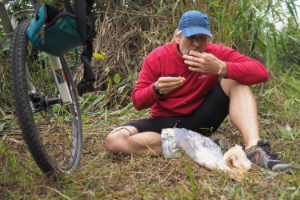
Banana and crackers. Emergency fuel.
Day 6 - 01 January 2016
Viengthong to Nong Khiaw
With only a limited number of days remaining I was forced to make up some distance by busing through from Maung hein to Nong Khiaw. This would give me a day to make it through to Oudomsay in time for my flight back to Vientiane.
Woke to a slightly slower Viengthong after their new years celebrations but did manage to find a decent breakfast spot. The bus only left at 12, so I rode around the town a bit and went to visit the NEPL PA office. The bus journey was a welcome change and hardly hurt at all.
We arrived in Nong Khiaw about 30 mins before sunset and was completely blown away by the dramatic beauty of the place, I just didn't expect it. I literally thew my gear into the first guest house I saw and raced around taking photos before the sun went down.
With so many restaurants to choose from I ended up having two dinners, steak at one, hamburger at the next. Damn! that felt better.

Bike on bus, bus to Nong fhiaw

Day 7 - 02 January 2016
Nong Khiaw to Oudomsay, Distance: 114 km, Accent: 1,869 m
Got off to an early start in cool misty conditions. The first 30 km went quite fast, the dramatic scenery of the days before subsiding as we dropped down into the valley.
After the turnoff at Pak Moung, the road became wide, new, guttered and edged and ominously empty. A number of road construction stops later revealed the reason. I always managed to work my way past the string of cars, trucks and motorbikes to carry my bike over wet tar, duck under a swinging excavator arms or scramble through the bush at the side of the road.
The weather flipped from streamy to cold to rain throughout the day, the road climbing all the way till the last short blast into the city of Oudomxay. In actual fact, the trip really finished on the top of the mountain and it was with a vague sadness that I descended into the untidy, noisy outskirts of Oudomsay.


Roadside tap, free water.
Day 8 - 03 January 2016
Oudomxay to Paksan
I had to run around looking for something I could use to make a box for my bike and eventually found a damp piece of cardboard. Was more tape than box, but it worked and got onto the flight back to Vientiane and survived the bus to Paksan.
All said, it was an amazing trip into areas of Lao I have never seen before. I loved the climbing again and the mountains and hill people. Definitely heading up that way again in the future

Probably the ugliest bike box I've made so far.

Short video of this trip