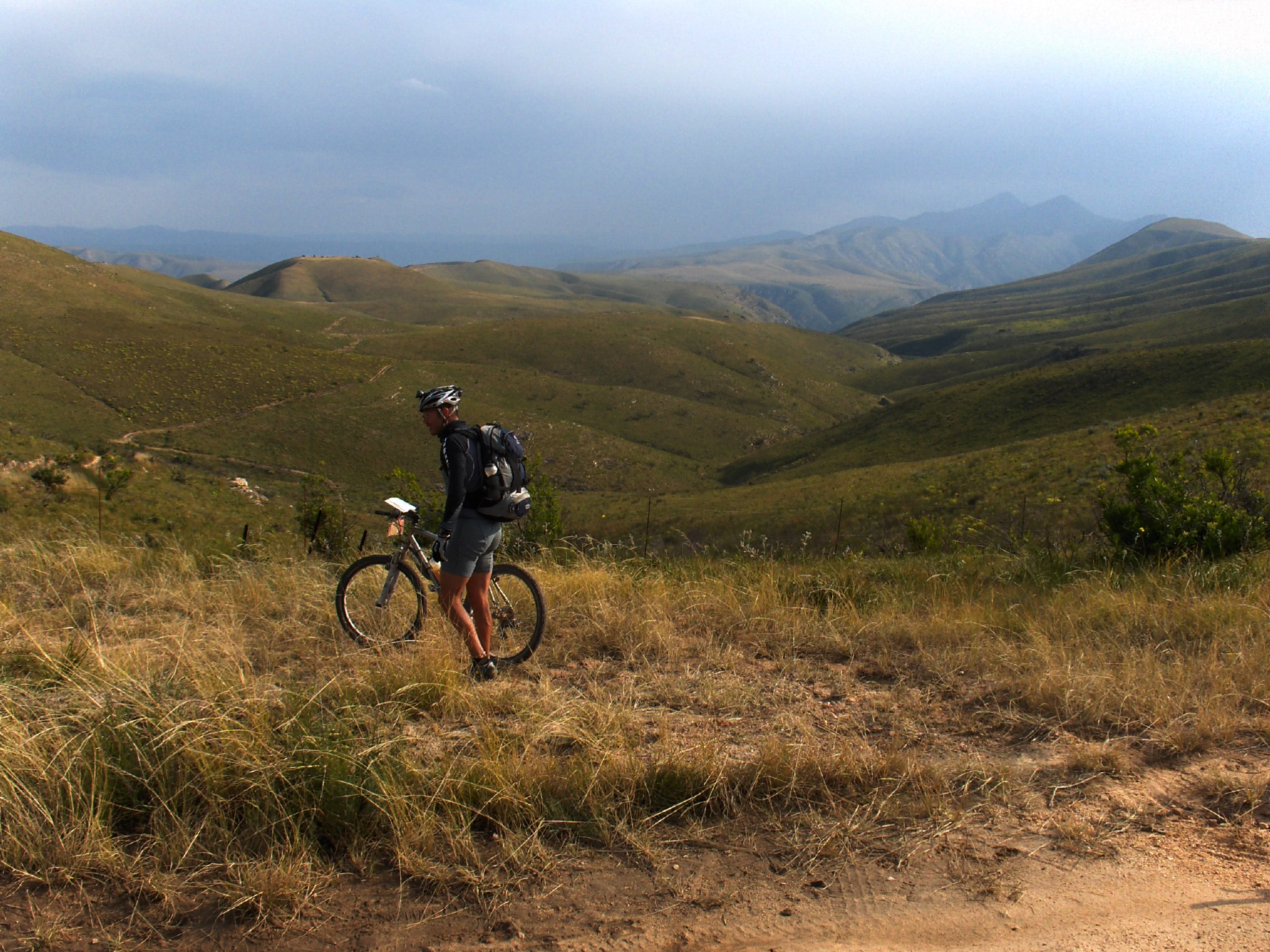
"A series of Fortunate Events" (PT2)
For the first time during the race, we overslept.....
Day 7 - Smuts Pass to Gunsteling
120 km
560 m climbing
12 hrs cycling

Freedom race tip # 7 - Advice for men
Make sure that you have had already your full complement of children before this race.
Fed up
For the first time during the race, we overslept. As an unwritten rule in our race relationship, I was the one to get up first and motivate Cornell to get out from under the warm down duvets, not easy after only a couple of hours sleep with temperatures below zero. On the other hand, I would start fading during the last 12km of the days distance when my mind would decide its had enough, push off and leave my body to finish. At this point Cornell was a master of encouragement, he would lift my spirits and get me to the end point. On this cold morning I didn’t even hear the alarm, just woke up when it was light outside.
We rode off in clear skies, thick frost coating the ground, ice clinging to the fence wire alongside the gravel road. Although cold, the riding was exhilarating, good dirt roads led us through vast open plains. At one point, while having a bite to eat alongside the road, we saw in the far distance, a horseman galloping towards us. Dressed in black and with his balaclava pulled low over his face, he created an imposing image as he galloped right past us heading for no place in particular.

Cornell had this thing about food. If a large plate of food is placed in front of him, (as opposed to being able to dish up small portions for himself), he loses his appetite, goes pale and sometimes throws up. On this day he was undone by the generosity of the friendly farm folk along the trail.
Arriving at our support station under a steep portage just as light was fading, we decided to quickly eat, and then push over the potage and on into the night. We enjoyed an extra-large cooked meal provided by the farmers at Elandsburg in preparing for a long cold night on the bikes, headed out up the portage accompanied by the farmer on his trail bike as evening fell. It was dark when we descended the bone jarring jeep track in the dark, I crashed out twice but with no damage to the bike or me.
The valley now in darkness, we studied the maps by torchlight for clues as to what lay ahead. It wasn’t long before we saw the headlights of a pickup searching around on the farm tracks looking for something. It was actually us they were looking for, as they had been tipped off by the previous farmer and told not to let us carry on as they were worried about us riding off into the night with seriously low temperatures forecasted for the area. Generally people don’t realize what you can accomplish on a bike, or at least imagine that you have no clue of the risks or dangers outside. We really wanted to move on, but there was no arguing so once again we gave ourselves over to rural hospitality.

We were taken to their farmhouse, given a room, which belonged to their children who were away at boarding school. We were then quickly ushered into the lounge where a HUGE steaming plate of farm fresh meat and potatoes waited for us. It was really only a few hours since our last meal, and I grinned to myself as Cornell politely tried to turn down the offer. In a typical South African farm kitchen, you eat what' on your plate or face serious consequences. I glanced at Cornell and watched him turn from red to white while he fiddled around the food with his fork. He made at least three trips to the bathroom. I had no problems, but then my friends always did call me “hoover” when we ate together.
Tucked into a warm bed, we heard news that the rest of the race competitors had been caught by the same storm we had experienced the previous day. Unfortunately they were caught high up in the mountains and really suffered for it. Two competitors decided to pack it in and abandoned the race at Rhodes. Quietly we thanked our luck and strategy for moving through the mountain section as quickly as possible, even though it was some of the hardest riding we had ever done.

Day 8 - Gunsteling to Cape Mountain Zebra National Park
150 km
660 m climbing
12 hrs cycling

Freedom race tip # 8 – Asking directions
Team up with one competitor from each official language group.They lied about English being a universal language, although it is useful when reading your cell-phone menu.
Compile a three-page list of recommended answers to the question “Is julle mal!” (are you *&%$ mad!?)
Disregard all directions ending with the words “you can’t miss it”.
Radio Fame
To compensate for been hijacked from our plan to ride on into the night the previous day, we made a 2am start. I can’t even begin to describe the intensity of the cold that early in the morning and a long steep downhill on route didn’t help much either. Around 4am we came to a small town and desperate for some warmth, walked into the only place that was open, the local police station where we pleaded with the duty sergeant to make us a mug of coffee. Although he complained that we were wasting his time commenting that "This is not a 7 / 11”, it was light hearted and soon we were sat on the hard wooden bench, warming our hands around mugs of steaming coffee as the radio cracked a report about a stabbing in the local shebeen.

We were hungry and dreaming of food when we finally reached the afternoon lunch stop, but the farmhouse was deserted. As is typical of rural areas, the house was wide open, but not a sole in sight. I must confess that we did sneak into the kitchen and raid the fridge of some fruit, but there was little else of food value. I thought of our double dinner the night before and wondered if it was not perhaps prophetic.
The rest of the day was lost in a haze of thoughts as the miles slid by. By late afternoon we had entered the Cradock Mountain Zebra National Park, and arrived at the campsite quite early. This was one of only two support stops from which we were not permitted to ride after dark, due to the rules and regulations of the Protected Area. We settled into the camp, did washing and serviced the bikes.
That evening we went to the camp restaurant and were busy eating when a lady at the table next to us leaned over and asked “Sorry to worry you, but are you the two cyclist who are currently leading the Freedom Challenge?” We were really taken aback, especially when they told us they had heard about our progress on a national radio broadcast! I did find myself grinning a little wider and a bit longer than normal.
Day 9 - Cape Mountain Zebra National Park to Van De Venterskraal
120 km
1 040 m climbing
14 hrs cycling
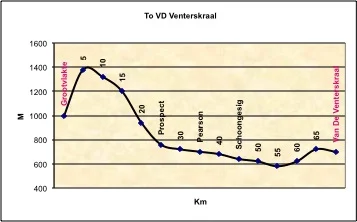
Freedom race tip # 9 - Cycle at 85% of your actual ability:
This race is a mental challenge, and is won or lost in the mind, not the legs! So if you are mentally challenged fill out an application form now! No seriously, it’s nothing to do with the legs.
The plains of Camdaboo
Leaving at dawn we cycled along winding park roads mindful of the “Danger Rhino” signs till we arrived at the appropriate dry riverbed marked on our maps where we exited the park through a hole in the fence. As a park manager myself, that felt a bit weird. On the other side of the fence we cycled, pushed, and carried up a short steep track where we were greeted with the vista of the vast plains of Camdaboo stretching out for as far as we could see. The downhill was exhilarating but not completely controllable as the surface was strewn with loose gravel and boulders. My disc brakes paid for themselves on this downhill alone. I can remember the single track to the main gravel road after the downhill as some of most exhilarating of the trip with loads of opportunities to get airborne. Maybe not the best idea with 30kg on your back and more than 1000 km to go!

Arriving at the next support station, a game farm, we shared a huge breakfast with the organizers of the race who were on their way back to Cape Town. It was great to see them and catch up with all the gossip from the rest of the field, the havoc wrecked by the storm in the Drakensberg Mountains, the accusation from the guesthouse in Rhodes where we “stole” a loaf of bread and the woes of those who dropped out of the race at Rhodes. Heading out from the farm, we tackled a long muddy portage up a mountain track, followed by a pleasant “pick your bike up onto your shoulder and hike down a trail” following a long deeply wooded valley, and also climb over a lot of barbed wire fences.

At the base of the hiking trail we were greeted by a makeshift signboard wired to a gate saying “Ben and Cornell, come inside for beer and biltong” We found out that this farmer had also been following the race on the radio, and knew we were heading his way. We felt it would be extremely rude to ignore his invitation, so filled up with coffee (no beers thank you) and left with a week’s supply of fresh game biltong, which we finished the same day.

We had reached the stage of the trip where your body is in a constantly energy deficit state and we (or at least me) unashamedly ate anything and everything we could lay out hands on. I recalled during the previous year’s race, where I had ridden off the track to a farm house, knocked on the door and asked the farmer if he could please make me a couple of peanut butter and jam sandwiches! He did, and I hardly even feel ridiculous at all.
It was still a long way to the next support station, but the riding was wonderful, Karoo farms, sheep (complete with working sheep dogs) and wind pumps all the way. I struggled the last 12km as normal, but with Cornell as my ever faithful coach, we arrived at a large slightly scary abandoned farm house, prepared earlier for out arrival with another monstrous farm meal designed for 5, devoured by 2.
Scary dreams that night.
Day 10 - Van De Venterskraal to Bucklands
155 km
580 m climbing
16 hrs cycling
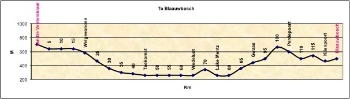
Freedom race tip # 10 - Do not watch your bikes odometer
If a watched kettle never boils, then a watched odometer just never moves ahead fast enough. I found it best to select physical landmarks, such as far distant mountain ranges or other galaxies.
Game of Thorns
This, the 10th day of the race was for me a day dedicated to the “Tube God” and I personally littered the route with sacrifices and offerings. Puncture followed puncture as most of the route was lined with Acacia thorn bushes, 3 to 6 inches of multi-pronged nastiness. Impossible to avoid, growing in the track, on the shoulders, creeping across and lying in clusters everywhere a tire could turn.
As a result, it was a long frustrating day for both of us as Cornell waited patiently for me through my “tube god” sacrifices. Cornell had invested in tubeless tires for the race, and it was uncanny how well they worked. He would stop, wrench out a 4 inch spike imbedded to the hilt in middle of the tire which would then emit a small “psst” a split second before the tire sealed, spin the wheel a few times off he would go. I had thick plastic tire liners and slim, but I might as well have used party balloons for all the protection they afforded. I think the only thing that would have worked was if I had beat a ring of sheet metal around the outside of my tires.

Beside the punctures, we had to negotiate a number of portages and some pretty confusing navigation. This was game farm country, and every farm had high fences and locked gates. The fences were over two meters to stop Kudu and Eland from escaping. Both species, regardless of their weight will happily clear a 2 meter fence without a run-up. I have seen it first hand on one of the nature reserves I have managed, and recall that at the time my brain couldn’t quiet come to terms with the images been received from my eyes so it all looked very much like a movie in slow motion.
I felt a little uneasy as I knew game theft and farm murders were not uncommon in this isolated area, and all the farmers are heavily armed with hunting rifles and shotguns, and certainly not shy to use them. Climbing over the 2,5 meter locked farm gates (usually two gates tied end on end on top of each other) with a bike is quite an art and for the first time during the trip while helping Cornell with his bike I realized just how light his bike was! His frame was made of titanium, and what a difference the weight must have made during the portages and climbs.

Cornell's titanium frame bike
Now already late into the night, we were negotiating yet another farm gate and making a fair bit of noise about it, when a light came on from the house next to the fence, and the next instant the quite of the night was shattered by a series of violent explosions as blasts from a high powered rifle sent bullets whizzing above our heads.
The hell with dignity and composure, we hollered at the top of our voices “Don’t shoot! Don’t shoot! We are cyclists!, we are in a race!” as if that would actually have meant anything! Nobody answered us and we didn’t stick around for introductions, all I remember was that our riding average improved quite significantly over the next few km’s. Later that evening we were met by the farmer owners from our next support station. They had become concerned about us and came looking. Their offer of a ride for the last 15km to the farm was tempting, we had already done 130km and it was late, nobody would know or care really if we cheated these few km as we were now days ahead of the rest of the riders behind us.
Of course we didn’t, instead we rode in front of the pickup and used their headlights to light the way. The problem was that we felt a bit guilty at holding them up from a warm house and rugby match on TV, so we upped the pace and ended up riding the last 15km at a ridiculously fast pace, arriving at the farm completely spent.
Hospitality once again surpassed all our requirements, and we fell asleep well after midnight, warm, full stomachs and smiles all round.
Day 11 - Bucklands to Cambria
100 km
880 m climbing
13 hrs cycling


Freedom race tip # 11 – Beware the dotted lines:
Dotted lines on the map represent field trips. These field trips however have nothing whatsoever in common with field trips undertaken at botanical gardens or during corporate workshops.
Break a leg!
I lay sprawled out on my stomach on the steep boulder strewn slope, my bike lying upside down against a rock further down the slope, front wheel spinning aimlessly. A light rain had just started to fall, and an icy wind blew the drops under the hood of my rain jacket. I tried to sit up but as I moved my leg a stab of pain shot through me like an electric shock. We happened to be in one of the most isolated areas of the route and daylight was fast running out, thoughts that didn’t escape me. A cold clammy sweat broke over me and I fought back waves of nausea that threatened to engulf me.
We had left at daybreak that morning looking forward to what was one of the highlights of the trip, entering the Biviaanskloof wilderness area. This area is an amazing mountainous area full of wildlife including three of the big five, Leopard, Rhino and Buffalo. We entered not through the conventional route taken by tourists, but by a deserted management track snaking down into the very heart of the wilderness area, miles from civilization or park infrastructure.
The trip down into this kloof involved a climb over a rusted green gate and then following an abandoned rutted track which snaking steeply down to the river invisible in the distance below. It was beautiful and I was reveling in the realization that we were now so far ahead that we were not only heading for a win, but also a new race record.

With that sweet thought, I lost concentration just long enough for my front wheel to slip into a deep erosion rut running parallel in the track. The section was a very steep, and the bike was forced off the track and went plummeting uncontrollably down the mountain slope. Blurred boulders, laws of physics, over the handlebars, the dull sound of flesh smashing against rock and then all was quiet, except for the whistle of the icy wind through the brush. Cornell, who was slightly ahead of me rounded a hairpin bend in the road, said he heard something on the slopes above him and was surprised to hear me calling out to him. On closer inspection he found me lying in a heap among the rocks and vegetation. I was a bit put out when he raced up the slope straight to my bike and after examining it in what I thought was an unnecessary amount of detail, finally proclaimed in joyful relief “Its ok! Your bike’s ok!” But then who can blame a guy who has his priorities sorted.
My prognosis was not as good, and while we did decide that my leg wasn’t actually broken, I could not put any weight on it, nor could I complete a full revolution of the pedals without excruciating pain. The problem was that there was no help even close, and to go back would have been worse than going ahead. With the cold, rain and daylight running out, staying put was not an option. So we continued on the long decent to the river valley below, every km taking us further and further from any help or support. I found that I was able to pedal with only my right leg and still keep moving and so forward went.

Once down in the river we were confronted with a flooded road, and during the next few hours carried our bikes through knee and sometimes waste deep freezing water. I seem to remember that we crossed the river 9 times, some crossing being as long as a few 100 meters. This was real wilderness, absolutely beautiful and we saw species of game at nearly every corner.
The pain was severe, but worse was the realization that this could be the end of the race for me. We were still only half way into the race and now the really long distances were about to begin. I was not a happy camper. With Cornell’s constant encouragement and support we made it over the highest gate I ever had to climb and rode the last few hours to the guesthouse in the dark. I think that both of us realized that I would probably not be able to continue the next day, but none of us said as much. The route was going to be one of the toughest of the race with huge climbs and extreme distances to cover.

Cornell gave me some Myprodol, which was like morphine to me who never even takes as much as a headache tablet, and some arnica ointment to rub on my leg. It took about 15 painful minutes to get myself onto bed and my leg under the blankets and with a feeling of desperate disappointment; I fell into a deep sleep.
Day 12 - Cambria to Willowmore
160 km
1,460 m climbing
16 hrs cycling


Freedom race tip # 12 – Interact with the locals:
Taking the time to interact with the locals will enrich your experience of the race, help you to develop an understanding of the rich cultural diversity existing in our country, and open your mind to the local knowledge of the area.
For me, the common thread of local knowledge expounded to me throughout the route went something along these lines: “The turn off you are looking for is just at the top of the 20km downhill you have just come down”
Break a bike!
When I woke that morning I lay very still for a long time, not really wanting to face the decision I would need to make. While I didn’t know, I still had hope. Eventually I moved my leg, and it was as if a miracle had taken place during the night, Most of the pain had simply disappeared. I can’t express the elation I felt just knowing that I had been given an opportunity to continue, that’s all I ever really wanted. Disaster had once again given way to hope, hope to resolve. I was still in the game!
It is interesting that throughout the remainder of the race I suffered no ill from my leg other than a dull ache during the first day, but one morning a few days after the race was over, I woke to the same excruciating pain, which lasted throughout the day then disappeared. “Deferred injury”, weird.

Yet another epic days riding in all aspects with over 170 km of some of the steepest climbs and descents of the route as we traversed the length of the Biviaanskloof mountain range. My spirits were soaring, not only because of the rugged wilderness we were passing through, but for the sheer relief of been able to continue. This was it truly a gift, in fact a birthday gift to me sent one day early.
In contrast, Cornell, was having a day of real concern when he discovered to his horror that a hairline crack had developed in his bikes titanium frame just alongside the weld on the bottom tube. This was a serious situation, one that would have us both examining the crack at regular intervals during the remainder of the race debating whether it was getting worse or staying the same. Besides the physical risk to Cornell if the frame failed suddenly en route, it could put Cornell out of the race altogether. To reduce the risk of ending his race, Cornell managed to organize that his second bike be flown down to Cape Town where it could potentially be delivered to him on the trail in the event of total frame failure. We both prayed that this would not be necessary, as the 24hr time penalty for this level of intervention would put the race record out of his reach.

During the day I took stock of my physical situation. Sitting on the saddle had now become an awkward business, so I tried to stand on the pedals as much as possible. I would delay sitting down as long as possible, changing to a lower gear and keeping most of my weight on my legs. The problem was that my left leg, bruised in the fall would start to protest, and then my right knee which I injured in the Drakensberg would start giving in. Eventually I would have to sit down, trying to find the best position out of an unhappy blend of raw skin, welts and bruises. I would just settle down to the best of the worst, when some or other obstacle in the track would require me to stand up, and the whole unfortunate process would repeat itself over again.
It was also the day that I discovered I could sleep while riding a bike. On one particular section towards afternoon I found I was struggling to keep my eyes open. At this point the road was good dirt, wide and either level or trending slightly downhill. The pickups using the road had left two smooth compacted wheel tracks lined with loose gravel on either side. I noticed that when I drifted onto these looser sections there was different feel and sound and this formed the basis of my bike sleep strategy. So by building up speed or on a slow downhill I would center my bike in the smooth section, close my eyes and blissfully dose off until the bike wandered onto the shoulder where the different noise and vibrations would wake me from my snooze. I would re-center the bike and do it all over again. Many times I was able to re-center the bike without actually opening my eyes. I can’t imagine I ever dozed of longer that 15 or 20 seconds at a time, but after 15 or 20 minutes of it, I felt pretty well rested.
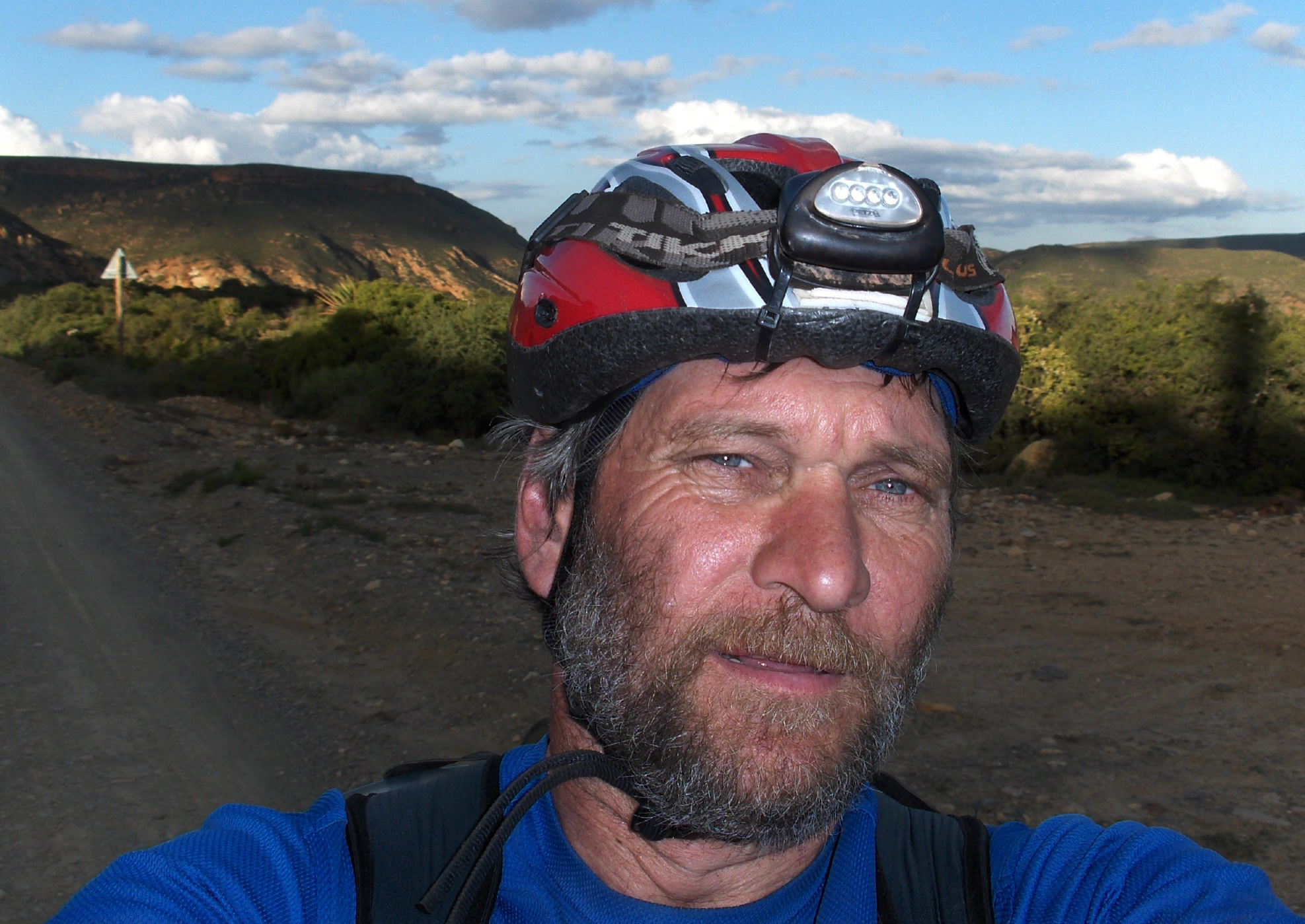
The last stretch to Willowmore was a long series of climbs, and we were well spent when we finally arrived in the dark at our support station in the town. Our work not quite done, we first underwent some “medical monitoring” conducted by two postgraduate sports science students who were using us to monitor the effects of extreme exercise on the body. They were quite astonished by the rapid weight loss we were experiencing as a result of the sustained efforts and rigors of the trip.
Despite eating like a weightlifter, I lost 7kg during the race.
“A Series of Fortunate Events” (PT 1)
Both water bottles on my bike were frozen solid,.......
My personal perspective of the 2006 extreme mountain bike race across South Africa, “The Freedom Challenge”

Finding the soul of South Africa
Both water bottles on my bike were frozen solid, the tube to my hydration bag standing out like a piece of ‘bloudraad” (fencing wire) next to my shoulder. My hands were dead, and acting like a propeller was no longer having anyeffect. My speech was slurred, and I stopped thinking. I knew we were in trouble, but all I could do was rest my head on the handlebars and drift off to sleep.
“There’s a light! come on Ben, lets go!” said Cornell, fumbling with the gate catch. We both scrambled up the hill in the direction of the light. In the doorway of a small mud hut, the silhouette of a lady danced and swayed in the flickering glow of firelight coming from inside her hut. We could almost feel the warmth, comfort and safety of the fire when the door slammed shut, the bolt sliding home with a loud “thunk”. Dignity thrown aside, we stood at the door knocking, begging and pleading to be let in, but no amount of self humiliation could entice her to open her door to the two alien creatures she had seen running towards her that dark morning, skin alive and glowing (reflective tape) life support system (rucksacks) and a single evil white eye shining out the middle of our forehead (helmet LED)! Peeping trough a crack in the door, I could see her standing in the middle of the hut, hands clasped protectively in front of her trembling with fear.
With a creak of well-worn hinges, a door from the neighboring hut opened, and a lady, unaware of our presence, stepped out into the dark to empty a bucket into the frozen air. We needed no prompting and discarded all manners as we pushed past her and headed like a magnet for the small wood-burning stove in the middle of the kraal. With eyes closed, we crouched next to the stove and held on to the hot stovepipe as if worshiping a strange idol.
At some stage through the haze I felt a wooden crate gently pushed under me, and sank gratefully onto the bare planks. Again and again small pieces of wood were pushed into the tiny stove, while not a word was spoken.
Slowly, the warmth and comfort of the fire began to thaw my mind and I became conscious of pairs of wide bewildered eyes staring at us from all around the circular hut. Looking around, I saw that we were in the middle of a hut surrounded by an extended family of about fifteen people of all ages, huddled under blankets, hessian bags, newspaper, and coverings of all sorts of materials. After a time, we got up stiffly, mumbled our thanks, walked on stiff legs out of the hut and back onto the frozen steel of our bikes. We learned later that an escaped convict had recently terrorized the very same community.
It was 4 am.
Though not a single word was spoken during the incident in the hut, I will never forget the understanding, courage, compassion and generosity shown to us by that lady on that cold morning high in the mountains.
I had once again, experienced the “soul” of South Africa.


The Freedom Challenge is an extreme mountain bike race across South Africa, stretching from Pietermaritzburg in Kwa Zulu Natal to Stellenbosch in the Western Cape. The 2,300km route consists of gravel roads, two spoor dirt tracks, single cattle tracks an numerous portages where no tracks, paths or trails exist.
The route has been designed to pass through as many areas of natural beauty as possible, incorporating a number of nature reserves and conservation areas. The race is run during the middle of winter over some of the highest mountain ranges in South Africa where cold fronts and snow storms are a certainty at some stage of the route.
Why?
From the moment I first heard about the race and studied the details I knew that this was my race, a package of every experience gained through my life up to that point, the familiar stained and frayed jersey you love to wear around the campfire.
• It is unsupported, so once you start you are on your own in terms of decision making and basic survival.
• It is not a team race, although you are permitted to collaborate.
• It is nonstop, so although there are checkpoints at farm houses about every 100km or so, you choose if, when or where to stop, eat or sleep.
• The rules manual is one paragraph long, a paragraph longer than the safety regulations.
• No technical equipment such as GPS are permitted and the route is marked as a line on a series of orthophoto maps, low tech with high probability of getting lost on a daily basis.
• The outcome of the race is reliant on the integrity of each competitor to diligently follow the route and the rules, not catch a lift in the back of a pick up or take one of many possible short cuts.
• There is no prize money, the reward, a traditional Basutho initiation blanket, or a traditional whip with a maximum value of $30.
Bragging rights however, are pretty awesome.

Part 1
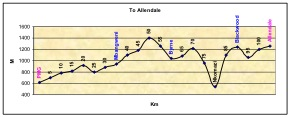
Day 1 - Pietermaritzberg to Allendale
105 km
1,980m climbing
11hrs cycling
Race tip #1: - Pack light:
It is amazing how generous some competitors became after the first day of the race, donating to the locals on a scale only exceeded by the National Red Cross Organization.
Start
This epic adventure started from the city hall in Pietermaritzburg as the church bell tolled 7am. Of the six of us who pedaled away on that Saturday morning, only four would cross the finish line in Paarl, some almost a month later.

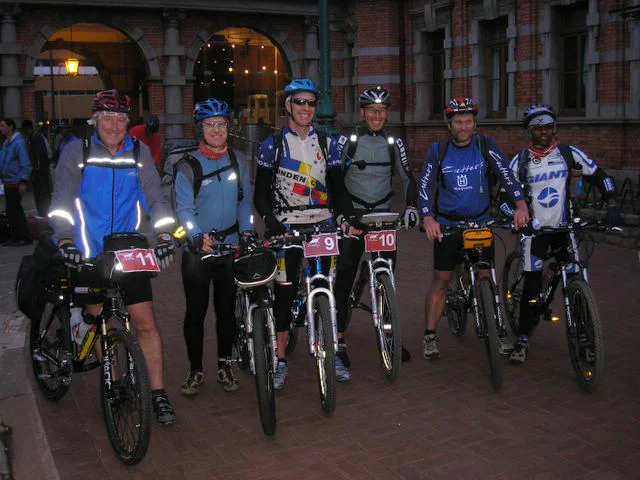
Left to right; Greville Rudock, Geritt Pretorius, Andre Britz, Corness van der Westhuizen, Ben Swanepoel, Zolani Mtshali
The first day was a good introduction to the race, with some big climbs, a few short portages, river crossings and a jumble of forestry tracks. I planned to take it easy on the first day and only went as far as the first support station, 105 km from the start.

It was good to get going after so much anticipation, preparation and training, a bit like a scuba diver finally hitting the water and feeling the equipment and gear, so unwieldy on land, come into their own. It’s a tough first day but I felt relaxed and confident that I had a solid strategy to at least, break the record and didn’t heed the temptation to race after the guys running out front.
Meanwhile, on a very different strategy, Cornell Van Der Westhuysen, an architect from Johannesburg and an experienced long distanced cyclist blasted ahead to the first support station, stopping only for a quick bite before racing towards the second stop at Ntsikeni Nature Reserve another 90km away.
I enjoyed an excellent farm meal and settled in for an early night, fully aware that according to my careful planning and strategy, my personal race would begin in earnest at 1:30am, only a few hours away.

Day 2 - Allendale to Masakala
160 km
1,620m climbing
21hrs cycling

Race tip #2: - Obtain the handbook “Understanding Race Director language”:
For example:
• “It will take you guys 45 mins to do that section, max.” = It’s going to be a long cold night under the African skies.
• “Its do-able” = It can be done, as long as you are in a mode of transport that has an SAA sticker on the side, a day consisted of 48hrs, contour lines are measure in seconds, not meters, and all tracks marked on the map actually do exist on the ground.
• "Tomorrows cycle leg is really a non event" = Tomorrow you will be cycling more than double your normal distance, as we could not find a suitable support station in the area. You will probably blackout from sheer exhaustion, and not remember a single thing about the day.
• “Stettynskloof is going to kill you” = Stettynskloof is going to kill you. (see later)
Break Away
01:30 am saw me quietly dress and slip out into the crisp cold air, my secret betrayed as I almost ploughed headlong into a cow standing silently in the middle of the entrance road. It felt good to finally be alone, and for the first time this race felt real. Navigation proved a lot easier on this section than the previous year and before long I was on the winding forestry switchbacks leading up to the fist mountain portage to the Nsikeni Nature reserve.

On arrival at the lodge I was completely taken a back to find Cornell relaxing outside on the porch with no sign of preparations to move on. Over a quick lunch together, I heard how he had been caught by darkness the previous night while negotiating the portage, and had spent the night on the floor in a shepherds hut, waking during the night to the scurry of cockroaches covering the thin blankets given to him. Greeted to sharp stabbing pains in his knees that morning, the enormity of the race sunk in and he decided to abandon his original strategy and spend the day waiting for the rest of the competitors to arrive. was ready to move on, but after some discussion we realized we both had a very similar strategy in terms of actual distances and days, and decided to ride together at least for the next few days. In actual fact, we ended up riding together for the remainder of the race, the single best decision I made during the entire race.

For the rest of the day, we rode hard. The first few days of this race are incredibly difficult, mainly because your body is still adapting to the distances and sheer brutal effort that will soon become pare for the course. The only time I honestly thought about quitting was during those first two or three days.
I remember very little of that evening other than we struggled to find the village where our guest house was located. How we found it, what the rooms looked like, what we ate is still a mystery to me even though I can still easily recall every smell, taste and feeling of the remainder of the race.

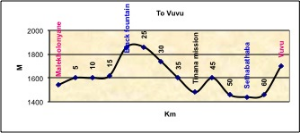
Day 3 - Masakala to Vuvu
125 km
1,200m climbing
18 hrs cycling
Race tip #3: - Nutrition Come into the race a few kilograms over your ideal weight.
During the race eat everything and anything you can get your hands on. Steal food from kind trusting country folk, your competitor’s rucksacks, and out of farmer’s lands alongside the road. Bang on doors in the middle of the Karoo demanding peanut butter and jam sandwiches.
At support stations, sneak into the lounge under the cover of darkness and remove (completely) all fruit from the creative display on the coffee table. Do not feel guilty. Very importantly, stop this behaviour immediately on completion of the race.
Heading for the berg.
Mentally and physically, this was the hardest day of the race for me (other than Stetynskloof of course). My motivation levels faltered at the mere thought of the physical effort and pain I knew would be needed to complete the daily route, and I started doubting if I really did have the mental and physical stamina to make it.

At one point I think Cornell realized how I was feeling, and he made me eat a couple of energy gels in spite of my weak protests. It’s just amazing how often a shortage of food (fuel) caused my motivation to plummet. Within a few minutes I was a new person. Food, or lack of decent nutrition, was a major issue for both of us on this day, and we suffered for it.
We rode hard the entire day, trying to put distance between ourselves and rest of the field at this early stage of the race when we knew everyone would be suffering and struggling to adapt to the demands of a race of this nature. We both paid some “toll fees” for our efforts, I managed to crash off the path and injure my knee which has never completely recovered, and Cornell went over the handlebars straining his wrist.
Navigation during this section of the route is notoriously difficult, and later that night, in coal black freezing conditions, we lost our way and had to negotiate a steep cliff, only to come up against a strongly flowing river. After searching the bank for a way over, we came to a reasonably flat stretch of water about 20m wide, and started wading across. Halfway across the frozen water, the firm sand bottom gave way and with shouts of alarm we were both swallowed up to our thighs in porridgy quicksand. We literally had to throw our bikes across to the bank and somehow managed to get across to the opposite bank without falling headlong into the icy water. I do not want to think of what would have happened had we soaked our bodies, clothes and kit in that water, with the air temperature already well below zero.
A few hours later, and utterly exhausted from climbing impossibly steep tracks, an “angel” in the form of a Catholic Priest from one of the mission stations drove up to us out of the blue with news that our designated support station was deserted. He had been searching for us for hours to give us this news. It was now close to midnight as he started banging on doors, eventually organizing for us to sleep in a shepherds hut. Blankets were quickly loaned from a neighbor and a small shop opened for us where we bought bread, bully beef, baked beans and yogurt.

I will never forget looking at a shelf of the shepherds one room hut, noticed that he had only one knife, one spoon and one plate, yet he was so generous to us. everything he had, he made available to us. Somehow, I got the spare bed, and Cornell the floor.
It was well after midnight when warm, safe, fed and dry, we fell asleep trying not to think of the 1 000m high portage over the Lehana pass that waited for us the following morning.

Day 4 - Vuvu to Rhodes
50 km
1,160m climbing
10 hrs cycling

Race tip #4: - Standard toolkit:
If the farmer’s toolkit consists of “bloudraad and tang”, then the freedom challenge toolkit must consist of “duck tape and a multi tool”. I used duck tape to create a new sidewall for my tyre; Amy used duck tape to repair a competitor’s knee joints.
Other uses include:
Waxing your legs (stick on, rip off),
Pain killer (Sniff the sticky side)
Competitive advantage. (Tape your competitor’s bike to his bedpost, and then slip out in the middle of the night)
Lehana Pass

The Lehana pass portage was one of the highlights of the route. A 1 000m elevation hike over the Maluti mountains following an infamous trail used by cattle thieves to bring their stolen goods on hoof into Lesotho from neighboring South Africa. The trail joins the gravel road at the top of Naudes neck, at 2 500m one of the higher mountain passes in South Africa. During the previous years race I had suffered as the weather closed in, driving temperatures down into the minus, reducing visibility to a few meters while we scratched around blindly looking for the trail in the growing darkness. It was only with the help of some shepherds crouching in a storm shelter that we finally reached the gravel road, and which point our troubles had only just begun.
This year however, everything was different, the weather was crisp but clear, the trail plain to see in the clear blue skies and my body finally in sync with my mind. We had finally become a team.

In warm sunshine, we pushed, pulled and carried out bikes up the ridge with all the Southern Drakensberg falling below us. Soon we were over the ridge and absolutely flying down Naude’s neck, where ice still clung to the rocks on the shoulder of the gravel road.
We reaching our support station at Rhodes in broad daylight and decided to celebrate the first big landmark of the race at stay put. It really was a well-deserved luxury and we bought a handful of sweets at a local shop to celebrate. We washed clothes, cleaned our bikes and soaked in a hot bath massaging our spirits for the next leg of this amazing race across South Africa.

Day 5 - Rhodes to Loutebron
125 km
1,080 m climbing
16 hrs cycling

Race tip #5: - What spares to take with:
Due to the high degree of technical advancement made on mountain bikes over the past few years, selecting the correct spares to take on a race of this nature has become a science in its own right. Based on my own valuable experience, I would recommend that the following hi-tech, ultra specialist items be included in your spares list:
• One bicycle tyre (Any old one will do)
• One standard bike cable (Price R7.00)
The chill before the storm
Now well ahead of the rest of the field and feeling stronger every day, we set out to make the most of our hard earned advantage. Climbing out of a warm bed in the middle of a winters night at altitude is not the easiest, but my “Just like heaven” ringtone helped.
Breakfast was a quiet affair, as we were the only guests stupid enough to be enjoying a hearty breakfast at 01:00 am. We later heard we had been accused of steeling the extra loaf of bread that went missing from the walk-in pantry at pretty much the same time as we were having breakfast.
At 02:00 under a charcoal canopy punctured with pinholes of a billion pulsating stars we set off, totally overwhelmed by the spectacular majesty of a night sky in its fullest splendor. What we failed to realize, was that the temperature was already well below freezing, (reported later as -9 degrees) and that as we descended into the long deep valley it would drop even further.
The wind chill factor of freewheeling downhill at over 30km per hour would cause us the pain and agony that left us crouched on a crate with hands glued to the wood stove in the middle of the shepherds hut. One moment disaster and the next, relief, such is the pain and pleasure, passion and dreary slog of racing the Freedom Ride. It is an emotional roller coaster ride in every way.

Another 110km of gravel road, two mountain portages, a shredded rear tire, and one day’s music rations, filled the passing of the sun. Cornell had raced ahead, and I rode alone for much of the day which was very enjoyable. I did wonder if he had actually broken away from me to race ahead but I didn’t mind, I had a pretty good race strategy, I was on schedule, feeling strong and had the advantage of knowing from the previous year what was still to come. found Cornell relaxing at the next support station and as soon as I had eaten, we took on the next portage over the mountains via a firebreak into the next valley just as darkness fell. We were keen to do the next portage in the dark anyway, but once again found ourselves at the receiving end of the mercy of “angel’s”. This time in the form of Japie Smith and his wife, who refused to allow us to proceed, insisted on taking us into their home. We had only come to them seeking local knowledge, but ended up giving ourselves over completely to the warm hospitality of rural South Africa.
Drugged on the contentment of full stomachs, clean clothes and warm fires we listened to Japie’s exploits on his trail bike, which he has adapted into a hill climber, complete with a trucks flywheel as a rear sprocket!
His favorite trick is to invite the city hill climbing trail bike clubs to his farm on weekends to test their high tech machines, and then, wearing shorts, long socks, vellies and a bush hat, “chug a lug” up near vertical mountain slopes and slabs of rock alongside the ”official” smoothed out hill climb as if on a Sunday paper run. He said he had some photos in a magazine to prove it, but I didn’t need to see to believe, not with Japie.
Blissful sleep.

Day 6 - Loutebron to Smuts Pass
120 km
880 m climbing
14 hrs cycling

Race tip #6: - Map Pouch:
Have some system whereby you can keep your daily route maps handy. You want to be able to check them while on the move.
Actually know how to read a map.
Storm
Cornell is an amazing navigator, probably something to do with well-developed spatial orientation due to his work as an architect. He always knew exactly where we were, except for today when during the early morning portage, we inadvertently descended the wrong valley. Although we didn’t loose much time as a result, it bothered him for the rest of the day.
It was also the day that the storm struck.

It started fairly mildly that morning, covering us with an icy mist as we neared the top of the porterage. Descending, we broke out the clouds, and it looked to be a cool cloudy day for our 115km trip to Smuts Pass just past Dordreght. We got all excited when we saw a few snowflakes drifting lazily down onto our clothes, laughing as we thought how we would report that we “cycled in a snowstorm!” Half an hour latter, the clouds released a carpet of thick silent snow, blanketing the landscape, our clothes and th road ahead. For the rest of the day, we cycled alternately through gently falling snow, icy wind, or freezing rain. I loved it, an amazing experience, silent, muffled movement.

Stopping at a Police station in the small settlement of Rossouw to confirm our navigation, we were summery detained without trial by the Station Commander, having to serve a sentence of fresh coffee, and a huge cooked lunch of venison and potato salad. We eventually received a pardon, and left with a suspended sentence of sandwiches, biltong, fruit and too many other goodies to mention, or to find the space to pack!
With evening, came the cold, not just an unpleasant cold, a life threatening numbness. Because of the minimum space and weight we could afford, we only had cold weather clothes to keep us warm while we cycled hard. The moment we stopped, the cold became desperate. Stopping for more than a few minutes was not an option. Riding off into that dark cold night with not a single light or landmark was a matter of faith, not confidence, and I remember making a mental note of the position of a hay stack I saw flashing past my headlight, thinking that we could always take shelter among the bales. At about 10:00 pm, we finally saw a light in the distance and after fumbling around in the dark being misdirected by a well meaning shepard arrived at the support station, an old colonial styled lodge.
Our experience here, after the extreme cold and uncertainty of the days ride, can only be described as fantasy. I will never forget the incredible sense of inner warmth and peace we felt, sitting on the floor in front of the huge log fire, a plate of hot food in my lap. Around me, the comforting “buzz” of a family quietly busy with the normal things that normal people do in a million normal homes around the world.
Although late, we somehow found the energy to service and wash our bikes, wash clothes and prepare for an early morning start. Sleep beneath a mountain of soft down came easy and sweet.
